
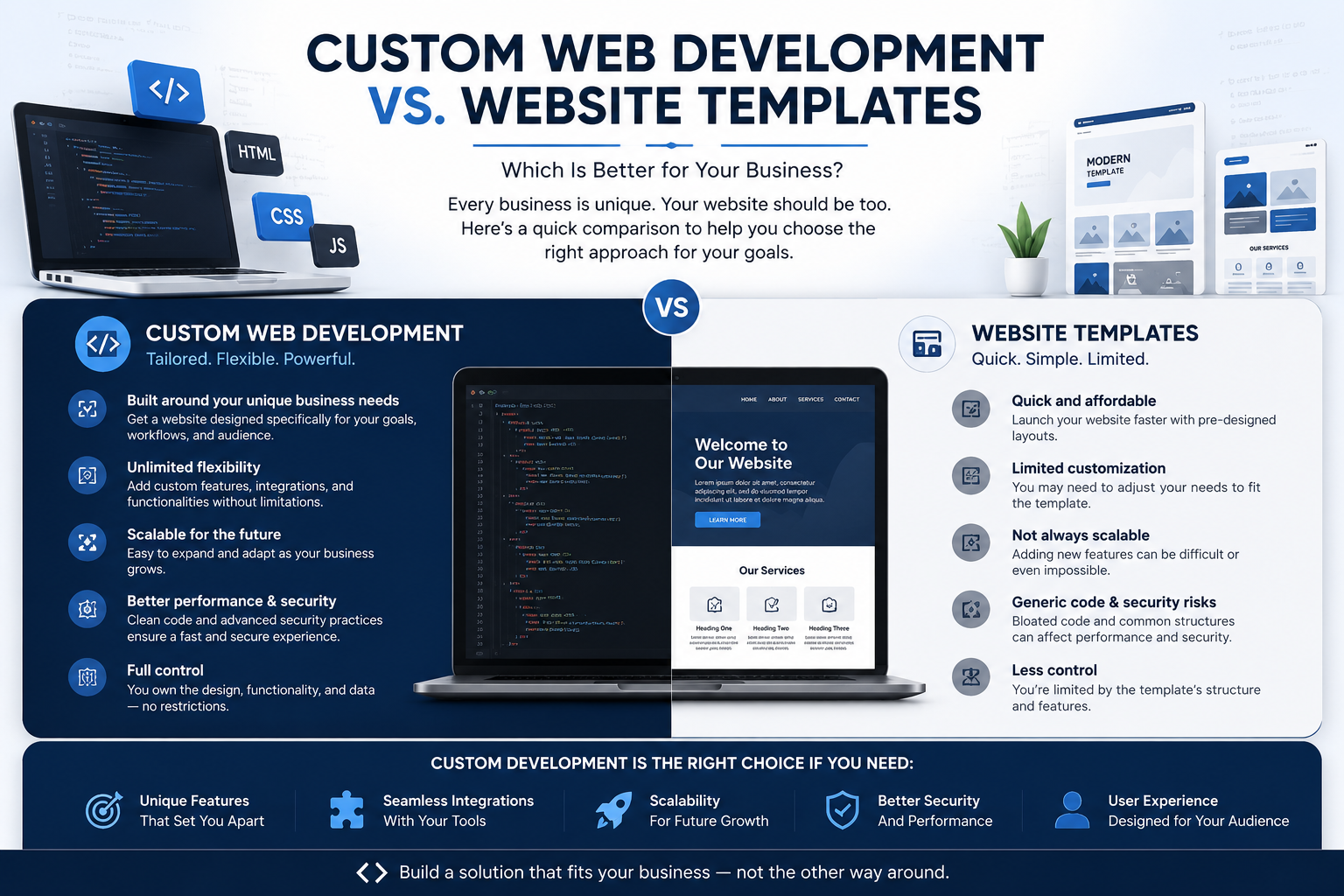
Choosing the right way to build a website can have a major impact on your business. Some businesses choose ready-made templates because they can be launched quickly, while others need a website built specifically around their goals, features, and workflows. For businesses with unique requirements, custom web development can provide greater flexibility and control than a standard website template. What Is Custom Web Development? Custom web development involves creating a website specifically for a business instead of relying entirely on a pre-designed template. The design, functionality, structure, and integrations can be developed around the company’s specific requirements. Custom development can include: This approach allows a website to be built around the business rather than forcing the business to adapt to a template. Why Do Businesses Use Website Templates? Website templates can be useful for businesses that need a simple website with standard functionality. Templates can provide pre-built layouts, sections, and design elements that make it possible to launch a website more quickly. However, businesses may eventually need features or functionality that a standard template was not designed to support. More Flexibility With Custom Development One of the biggest advantages of custom development is flexibility. A custom website can be designed around the exact requirements of a business. Instead of changing the business process to fit a template, the website can be developed to support the existing workflow. This is particularly useful when a business requires unique features or integrations. Better Control Over Website Functionality Templates usually come with predefined structures and features. Custom development provides greater control over how different parts of a website work. Businesses can develop functionality for specific requirements such as customer portals, dashboards, booking systems, calculators, forms, API connections, or other custom solutions. Supports Business Growth A website should be able to grow with the business. As a company expands, it may need additional pages, features, integrations, or custom functionality. A properly planned custom website can provide a foundation that supports these future requirements. This can reduce the need for major changes when new business requirements appear. Custom Integrations Modern businesses often use multiple digital tools and platforms. Custom web development can connect a website with external systems through APIs and other integrations. These connections can help businesses manage information more efficiently and automate certain processes. Better User Experience A custom website can be designed around the way customers interact with a business. Instead of using generic layouts, developers can create user journeys that make sense for the specific products, services, and goals of the business. A well-planned user experience can make it easier for visitors to find information and complete important actions. Custom Development for Web Applications Some businesses require more than a traditional website. Web applications can provide interactive functionality through features such as user accounts, dashboards, data management, custom tools, and business systems. Professional web application development can create these experiences around specific business requirements. When Should You Choose Custom Web Development? Custom development can be a good choice when your business: Why Choose Professional Custom Web Development? Professional custom development provides businesses with: Tailored Solutions — Features designed around specific business requirements. Greater Flexibility — More control over design, functionality, and integrations. Scalability — A foundation that can support future growth. Custom User Experiences — Interfaces designed around real customer needs. Advanced Functionality — Complex features that may not be available through standard templates. Professional Development — Clean, structured development focused on long-term usability. Conclusion Website templates can be useful for simple projects, but businesses with unique requirements may benefit from a more customized approach. Custom web development allows businesses to build digital solutions around their specific goals, workflows, customers, and future plans. Whether you need a completely custom website or a powerful web application, choosing the right development approach can help create a digital platform that is flexible, scalable, and built for your business.

SEO-Friendly Web Development Helps Your Website Rank Better
Having a professional Web Development is only the first step toward building a strong online presence. If search engines cannot properly understand, crawl, and index your website, it can be difficult to attract organic traffic from Google. This is where SEO-friendly web development becomes important. By combining clean development practices with search engine optimization, businesses can create websites that are easier for both users and search engines to understand. What Is SEO-Friendly Web Development? SEO-friendly web development means building a website with search engine visibility in mind from the beginning. It focuses on technical elements such as: These elements create a stronger technical foundation for SEO. Improves Website Crawlability Search engines use crawlers to discover and understand website pages. A well-structured website makes it easier for search engines to navigate through important pages and understand the relationship between different sections of the site. Clean navigation, logical URLs, internal links, XML sitemaps, and proper technical configuration can all contribute to better crawlability. Supports Better Mobile Experience Many users access websites through smartphones, so mobile responsiveness is an important part of modern web development. A responsive website automatically adapts its layout to different screen sizes, making content easier to read and interact with across devices. Helps Improve Page Speed Website performance can affect both user experience and search visibility. Optimizing images, reducing unnecessary scripts, improving code efficiency, and using appropriate caching techniques can help pages load more efficiently. A faster website can provide a smoother experience for visitors. Creates a Better Website Structure Search engines need to understand what each page is about. Using descriptive URLs, clear headings, organized navigation, and relevant internal links helps establish a logical website structure. This also makes it easier for visitors to find the information they need. Makes Content Easier to Understand Good development should support good content. Proper use of H1, H2, and H3 headings allows businesses to organize information into clear sections. Search engines can use these structural signals to better understand the topic and hierarchy of a page. Supports Technical SEO Technical SEO and web development work closely together. A professional development process can help implement: These technical elements help search engines access and interpret website content more effectively. Improves User Experience SEO is not only about search engines. Visitors also expect websites to be fast, responsive, easy to navigate, and simple to use. A well-developed website can reduce unnecessary friction and make it easier for visitors to find information or complete an action. Why Choose Professional SEO-Friendly Web Development? Professional development can provide: SEO-Ready Structure — Websites built with search visibility in mind. Responsive Design — Consistent performance across devices. Better Performance — Optimized code and resources for faster pages. Technical SEO Foundation — Important technical elements configured correctly. Scalable Architecture — A structure that can support future content and functionality. Better User Experience — Simple navigation and accessible content. Conclusion SEO should not be treated as something that is added only after a website has been built. When SEO principles are considered during development, businesses can create websites with a stronger technical foundation for search visibility. From mobile responsiveness and page speed to clean architecture and technical SEO, SEO-friendly web development can help create a website that works better for both users and search engines.
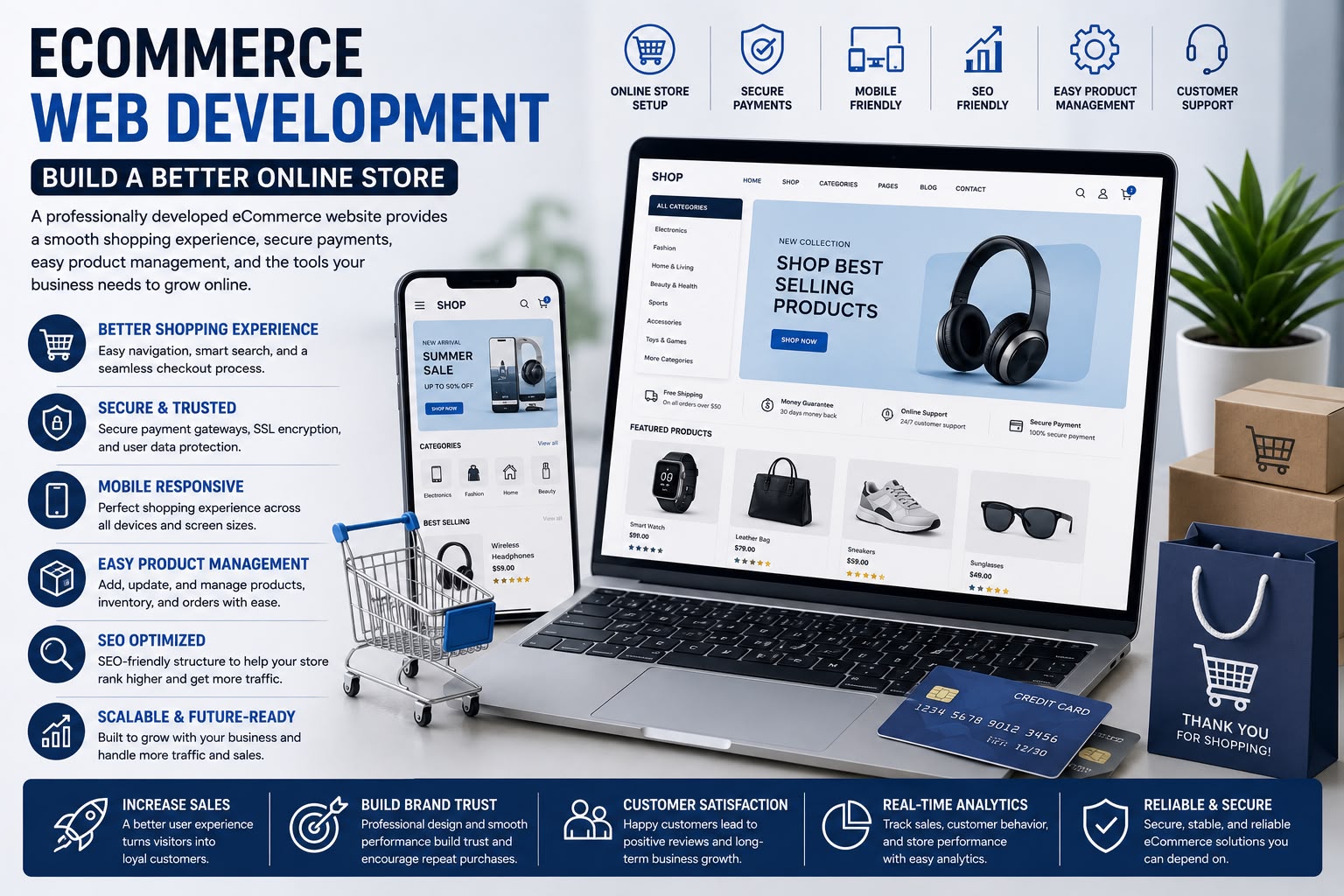
Ecommerce Web Development: Build a Better Online Store
Ecommerce Web Development: How a Professional Online Store Helps Your Business Grow Online shopping has become an important part of modern business. Customers expect websites to be easy to navigate, fast on mobile devices, secure, and simple to use. A professionally developed ecommerce website gives businesses a platform where customers can discover products, view information, place orders, and complete purchases online. For businesses planning to sell products online, choosing the right ecommerce web development approach can make a major difference. What Is Ecommerce Web Development? Ecommerce web development is the process of building an online store where businesses can display and sell their products or services. A professional ecommerce website can include: The website can be developed around the specific requirements of the business. Creates a Better Shopping Experience Customers want to find products quickly and complete their purchases without unnecessary steps. A well-structured ecommerce website provides clear navigation, organized product categories, easy search, detailed product pages, and a simple checkout process. A smoother shopping experience can encourage customers to spend more time exploring the store. Mobile-Friendly Ecommerce Design A large number of customers browse online stores using smartphones. Responsive ecommerce development ensures that product pages, menus, images, shopping carts, and checkout forms work properly across different screen sizes. A mobile-friendly store can help businesses provide a consistent experience to customers regardless of the device they use. Secure Online Payments Security is one of the most important parts of an ecommerce website. Customers need confidence when entering personal and payment information. Professional ecommerce development can include secure payment gateways, SSL configuration, user authentication, secure integrations, and other security practices to help protect customer information. Easy Product Management An ecommerce platform should make it easy for businesses to manage their products. Store owners can manage information such as: A well-built management system can make everyday store operations more efficient. Improves Search Engine Visibility An ecommerce website also needs to be discoverable through search engines. SEO-friendly development can include: Combining ecommerce development with SEO can give businesses a stronger foundation for attracting organic traffic. Integrates With Business Tools An online store may need to communicate with other business systems. Custom integrations can connect an ecommerce website with: These integrations can reduce manual work and help keep business information synchronized. Helps Businesses Scale An ecommerce website should be able to grow alongside the business. As product catalogs, customers, orders, and traffic increase, the website may require additional features and improved infrastructure. Scalable ecommerce development makes it easier to introduce new functionality without completely rebuilding the platform. Why Choose Professional Ecommerce Web Development? Professional development can provide: Custom Functionality — Features built around your business requirements. Better Performance — Optimized pages for a smoother shopping experience. Mobile Responsiveness — A consistent experience across devices. Secure Integrations — Safer connections with payment and business systems. SEO-Friendly Structure — A stronger foundation for organic search visibility. Scalability — Technology that can support future business growth. Better User Experience — Simple navigation and an easier purchasing journey. Conclusion A professional ecommerce website is more than an online product catalog. It can become an important part of a business’s sales, marketing, customer service, and growth strategy. With the right ecommerce web development approach, businesses can create a secure, responsive, SEO-friendly, and scalable online store that provides customers with a better shopping experience.
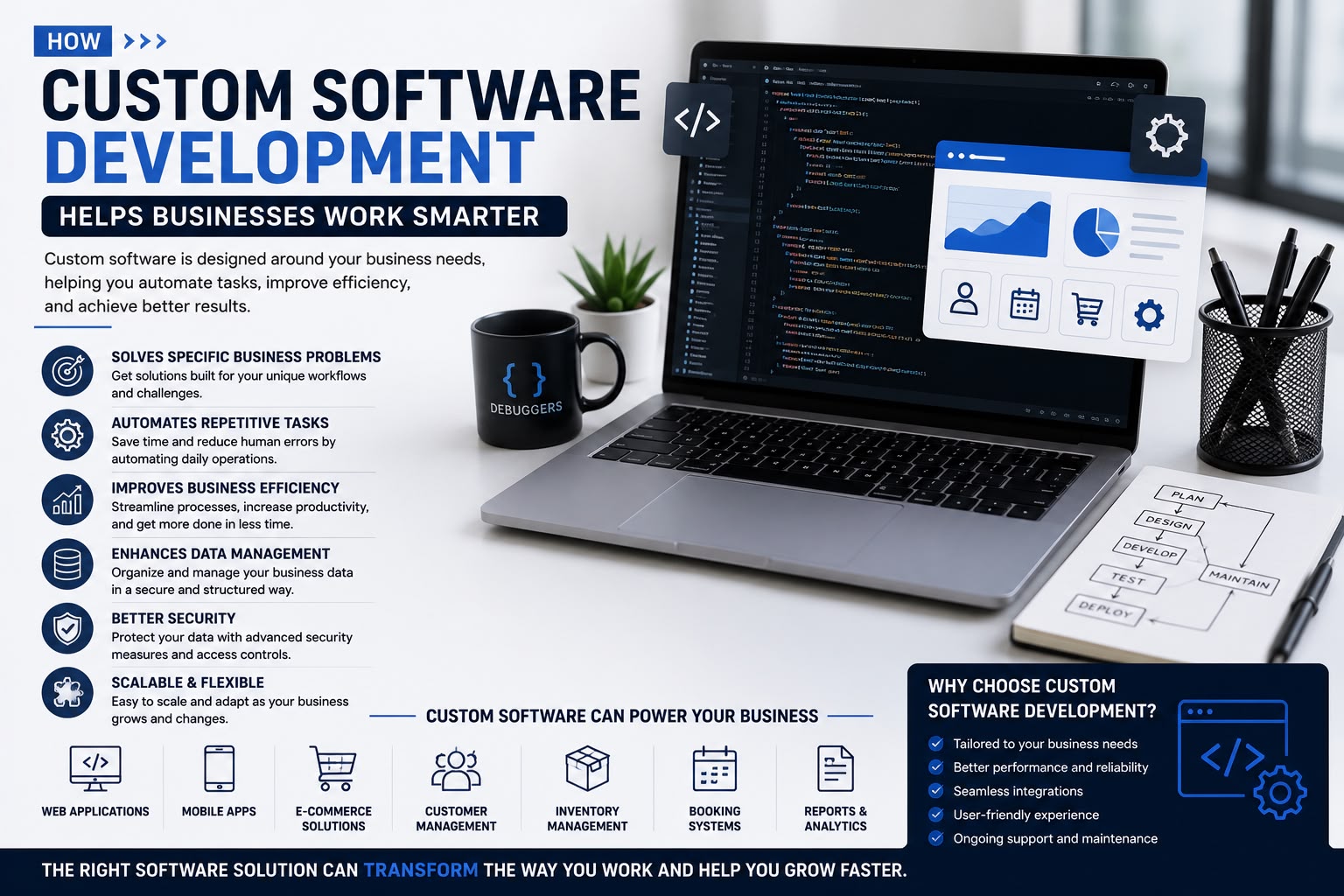
Custom Software Development Helps Businesses Work Smarter
Businesses today rely on technology for communication, customer management, sales, operations, and everyday tasks. When standard software cannot fully meet a company’s requirements, custom software development can provide a more suitable solution. Custom software is designed around specific business processes, allowing companies to automate repetitive work, improve efficiency, and manage their operations more effectively. What Is Custom Software Development? Custom software development is the process of creating software specifically for a business, organization, or particular business requirement. Instead of changing your workflow to fit an existing application, custom software can be developed around the way your business already works. It can include: Solves Specific Business Problems Every business has different requirements. Custom software allows developers to focus on specific challenges and create features that directly address them. This can make software more useful than a generic solution filled with features a business may never need. Automates Repetitive Tasks Manual tasks can consume valuable time and increase the possibility of human error. Custom software can automate processes such as: Automation allows employees to focus on more important responsibilities. Improves Business Efficiency When business processes are connected through one system, employees can access information more easily and complete tasks faster. A well-designed application can reduce unnecessary steps and create a more organized workflow. Enhances Data Management Businesses generate large amounts of information every day. Custom software can organize customer details, transactions, reports, inventory, employee information, and other business data in a structured system. Better data organization can also make it easier for businesses to make informed decisions. Provides Better Scalability A business’s requirements can change as it grows. Custom software can be developed with future expansion in mind. New features, integrations, users, and workflows can be added as business requirements evolve. This makes scalability an important advantage of custom software development. Improves Security Business applications often handle sensitive information. Professional software development can include security measures such as authentication, access controls, data protection, secure APIs, and regular updates. A secure application helps businesses protect important information and reduce unnecessary risks. Connects Different Business Tools Businesses often use multiple platforms for different tasks. Custom software can integrate with other systems through APIs and integrations, allowing information to move between platforms more efficiently. This can reduce duplicate data entry and create a more connected workflow. Creates a Better User Experience Software should be easy for employees and customers to understand. Custom applications can be designed around the actual users, making navigation, forms, dashboards, and workflows simpler and more intuitive. A better user experience can improve productivity and customer satisfaction. Why Choose Professional Custom Software Development? Professional development can provide: The right development approach ensures that the software supports both current requirements and future business goals. Conclusion Custom software development can help businesses move beyond generic tools and create solutions designed around their actual needs. From automation and data management to integrations, security, and scalability, professionally developed software can improve the way businesses operate and prepare them for future growth.
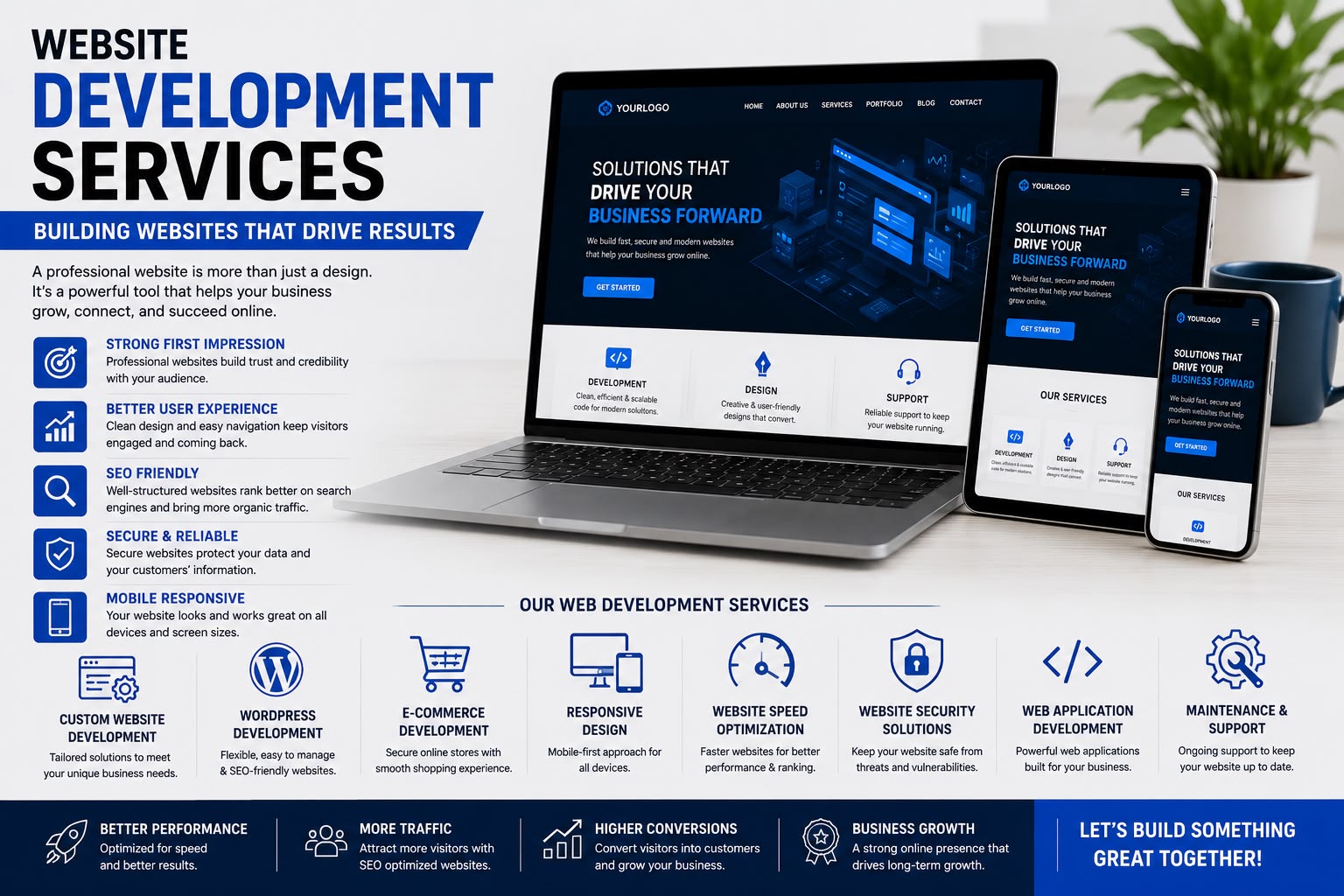
Website Development Services: What Businesses Need to Know in 2026
A professional website is no longer just an online brochure. For many businesses, it is one of the main ways customers discover services, compare options, and make purchasing decisions. With increasing competition online, businesses need websites that are fast, mobile-friendly, secure, easy to use, and optimized for search engines. Modern website development focuses not only on appearance but also on performance, functionality, and business growth. What Are Website Development Services? Website development services cover the process of planning, building, testing, launching, and maintaining a website. Professional web development can include: The right solution depends on the business goals, audience, features, and expected growth. Why Does Your Business Need a Professional Website? Customers often search online before contacting or purchasing from a business. A professional website gives them a central place to learn about your company, services, products, and contact information. A well-developed website can help businesses: Responsive Web Development People access websites from smartphones, tablets, laptops, and desktop computers. Responsive web development ensures that a website automatically adapts to different screen sizes. This creates a better experience for visitors and helps businesses avoid losing mobile users. SEO-Friendly Website Development Search engine optimization should be considered during development rather than added as an afterthought. An SEO-friendly website should have: A technically strong website gives SEO strategies a better foundation. Website Speed and Performance Website speed can directly affect how visitors interact with a website. Optimizing images, code, scripts, caching, hosting, and other technical elements can help pages load faster and provide a smoother browsing experience. Secure Website Development Security is another important part of professional website development. Businesses should consider secure connections, regular updates, strong authentication, reliable hosting, backups, and protection against common website vulnerabilities. A secure website also helps customers feel more confident when interacting with a business online. E-commerce Website Development Businesses selling products online need more than a basic website. Professional e-commerce development can include: A well-structured online store can make purchasing easier for customers and managing orders easier for businesses. Custom Website Development vs Templates Templates can be useful for businesses with simple requirements. However, businesses with unique workflows or specific functionality may benefit from custom website development. Custom development provides greater control over design, features, integrations, and future scalability. Why Choose Professional Web Development? Professional website development can provide: Better Performance — Faster and more efficient websites. Mobile Compatibility — A consistent experience across devices. SEO-Friendly Structure — A stronger technical foundation for search visibility. Custom Functionality — Features designed around business requirements. Better Security — Proper implementation of security practices. Scalability — A website that can grow with the business. Professional User Experience — Clear navigation and easier interaction. Conclusion Choosing the right website development services can make a major difference to a business’s online presence. A modern website should combine professional design with speed, security, responsive functionality, SEO-friendly structure, and a clear focus on business goals. Whether a business needs a simple corporate website, WordPress development, an e-commerce store, or a custom web application, professional development provides the foundation needed to compete effectively online.
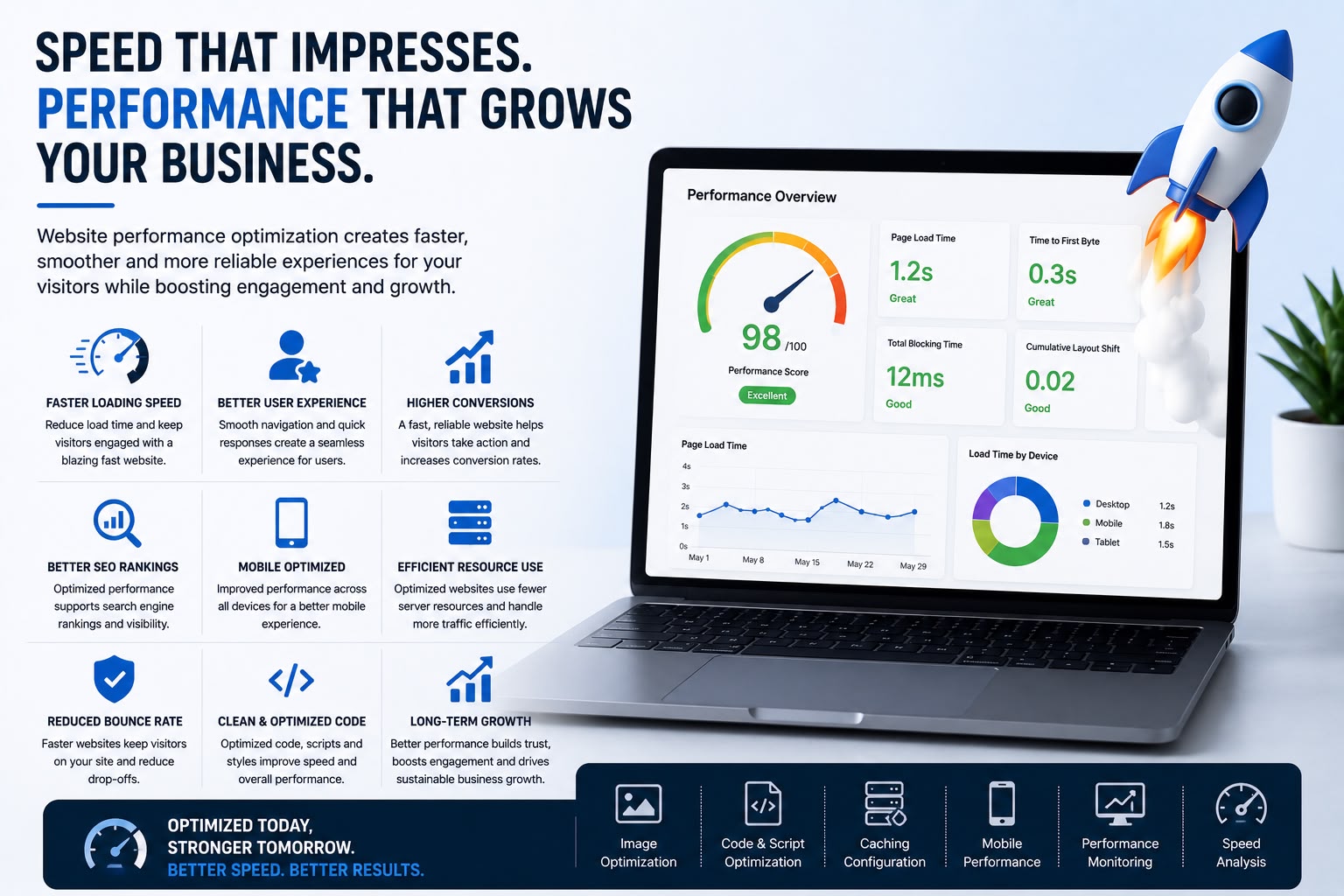
Why Website Performance Optimization Matters for Businesses
A website is often the first point of contact between a business and its customers. If a website loads slowly or responds poorly, visitors may leave before exploring its products or services. Website performance optimization helps businesses create faster, smoother, and more reliable online experiences while supporting better engagement and business growth. What Is Website Performance Optimization? Website performance optimization is the process of improving a website’s speed, responsiveness, and overall efficiency. It can involve optimizing images, reducing unnecessary code, improving server performance, optimizing scripts, and making sure the website works efficiently across different devices. Improves Website Loading Speed Visitors expect websites to load quickly. A faster website allows users to access important information without unnecessary waiting. Improved loading speed can create a smoother experience and encourage visitors to explore more pages. Enhances User Experience Performance affects how visitors interact with a website. Fast navigation, responsive buttons, smooth animations, and quick page loading make the website easier and more enjoyable to use. Reduces Visitor Drop-Off Slow-loading pages can cause visitors to leave before completing an important action. Optimizing website performance helps reduce unnecessary delays and keeps users engaged with the website. Supports Search Engine Rankings Website performance is also an important part of creating a search-friendly website. A fast, mobile-friendly, and technically optimized website can provide a better experience for visitors and support overall SEO efforts. Improves Mobile Performance A large number of users access websites through smartphones and tablets. Performance optimization ensures that websites load efficiently and function properly across different screen sizes and devices. Increases Conversion Opportunities A smoother website experience can make it easier for visitors to complete actions such as: Better performance removes unnecessary friction from the customer journey. Saves Resources Optimized websites can use fewer server resources and load assets more efficiently. This can help businesses manage their website infrastructure more effectively as traffic grows. Why Choose Professional Website Performance Optimization? Professional optimization can include: A professional approach helps identify technical issues that may not be obvious to regular website users. Conclusion Website performance is more than just page speed. It affects user experience, mobile usability, SEO, engagement, and conversion opportunities. By investing in professional website performance optimization, businesses can provide faster and more reliable digital experiences while building a stronger foundation for long-term online growth.
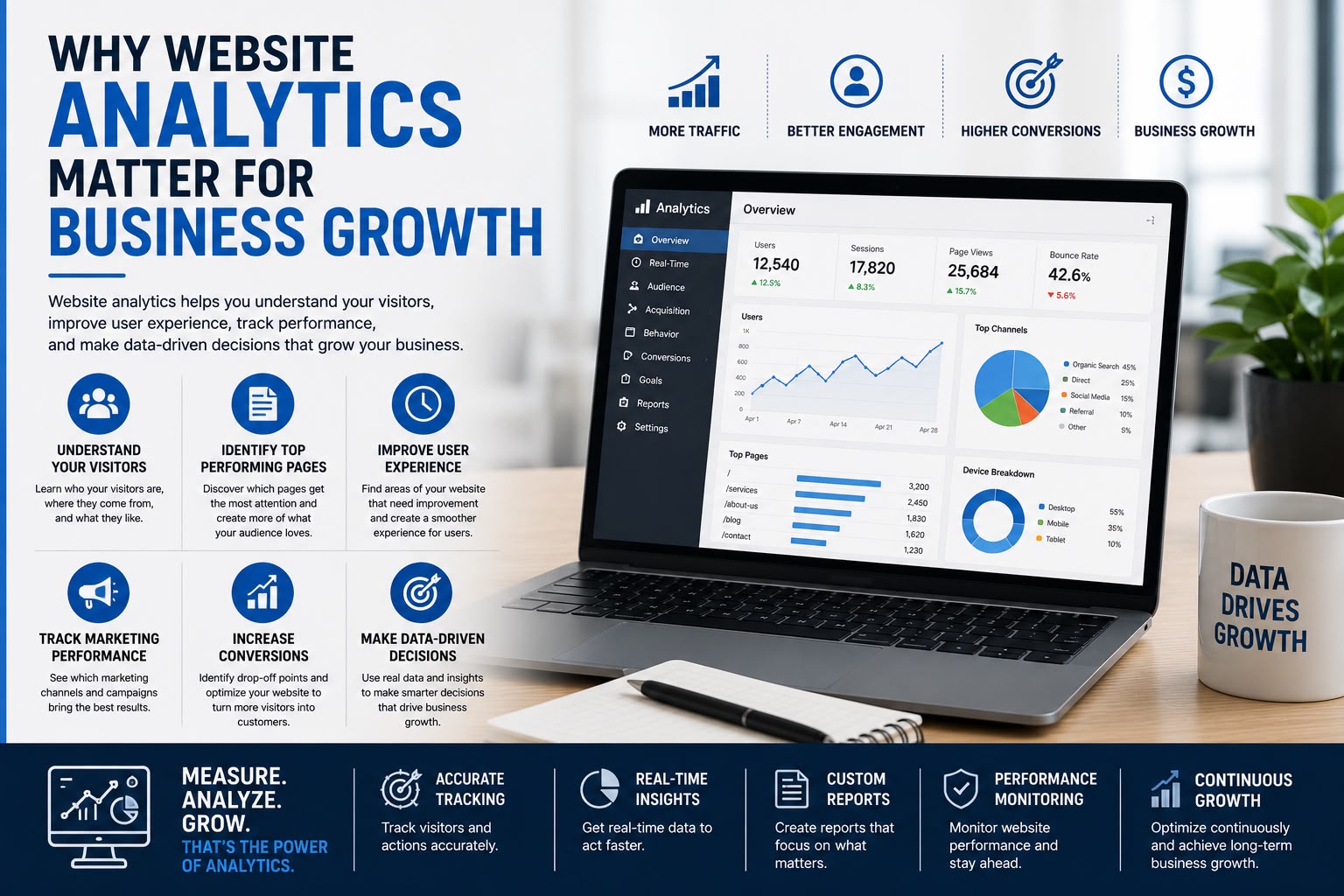
Why Website Analytics Matter for Business Growth
Having a website is only the first step toward building a strong online presence. Businesses also need to understand how visitors interact with their website. Website analytics provide valuable insights into user behavior, traffic sources, popular pages, and overall website performance. By analyzing this information, businesses can make better decisions and improve their digital strategy. What Is Website Analytics? Website analytics is the process of collecting and analyzing data about website visitors and their activities. It can help businesses understand: This information helps businesses understand what is working and what needs improvement. Understand Your Website Visitors Analytics can provide valuable information about your audience. Businesses can learn about visitor locations, devices, traffic sources, and browsing behavior. These insights help companies create better content and experiences for their target audience. Identify Your Most Popular Pages Not every page on a website receives the same amount of attention. Analytics can show which pages attract the most visitors. Businesses can use this information to understand what content their audience finds valuable and create more similar content. Improve User Experience Website analytics can help identify areas where visitors may be struggling. For example, if users frequently leave a particular page, businesses can review its content, design, navigation, or loading speed and make improvements. Track Marketing Performance Analytics helps businesses understand where their website traffic comes from. Companies can compare traffic from search engines, social media, email campaigns, advertisements, and other sources. This makes it easier to identify which marketing strategies are delivering the best results. Increase Conversion Rates The goal of many business websites is to generate actions such as purchases, form submissions, calls, or inquiries. Analytics can help identify where users leave the conversion process. Businesses can then optimize those areas to improve their conversion rate. Supports Data-Driven Decisions Instead of relying only on assumptions, businesses can use real website data to make informed decisions. Analytics can reveal trends and patterns that help companies decide which content, services, products, or marketing strategies deserve more attention. Why Choose Professional Website Analytics Setup? A professional analytics setup can provide: Proper implementation ensures that businesses receive useful and reliable information from their website. Conclusion Website analytics gives businesses a clearer understanding of how their website performs and how customers interact with it. By using this data effectively, companies can improve user experience, optimize marketing campaigns, increase conversions, and make smarter business decisions. A website should not simply exist online—it should continuously provide useful insights that support business growth.
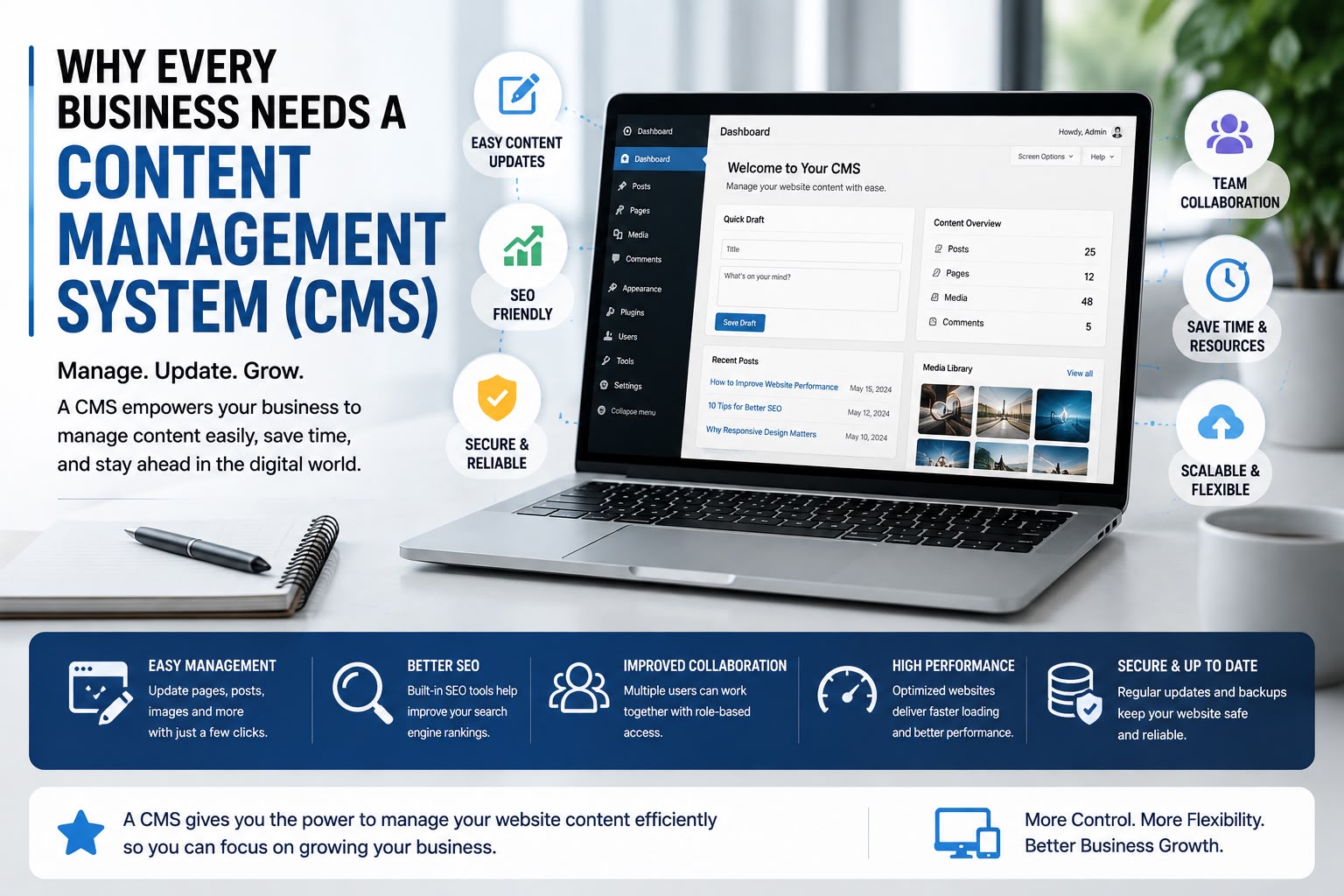
Why Every Business Needs a Content Management System (CMS)
Managing a website should be simple, efficient, and flexible. A Content Management System (CMS) allows businesses to update their website without needing advanced coding skills. Whether you’re publishing blog posts, updating services, or managing product pages, a CMS makes website management faster and more convenient. Today, businesses of all sizes rely on CMS platforms to keep their websites fresh, secure, and easy to manage. What Is a Content Management System (CMS)? A Content Management System (CMS) is software that allows users to create, edit, organize, and publish website content through an easy-to-use dashboard. Instead of writing code for every update, businesses can manage their website with just a few clicks. Easy Content Updates A CMS makes it simple to update text, images, videos, and pages whenever needed. This helps businesses keep their websites current with the latest products, services, and company news. Saves Time and Resources With a CMS, employees can manage website content without depending on developers for every small change. This reduces maintenance costs and allows teams to work more efficiently. SEO-Friendly Features Modern CMS platforms include built-in SEO tools that help improve search engine visibility. Features like customizable URLs, meta descriptions, image optimization, and sitemap generation make it easier to rank higher in search results. Improved Collaboration Multiple team members can access the CMS with different permission levels. Content writers, marketers, designers, and administrators can work together without interfering with each other’s responsibilities. Secure and Scalable Professional CMS solutions include security updates, user access controls, backup options, and plugin support. As your business grows, your CMS can expand with new features and integrations. Why Choose Professional CMS Development? Professional developers ensure: A professionally developed CMS provides long-term flexibility and business growth. Conclusion A Content Management System empowers businesses to manage their websites efficiently while saving time and improving online performance. From publishing content to optimizing SEO, a CMS is an essential tool for modern businesses. At Debuggers, we build secure, scalable, and user-friendly CMS websites that make content management simple while supporting long-term business success.
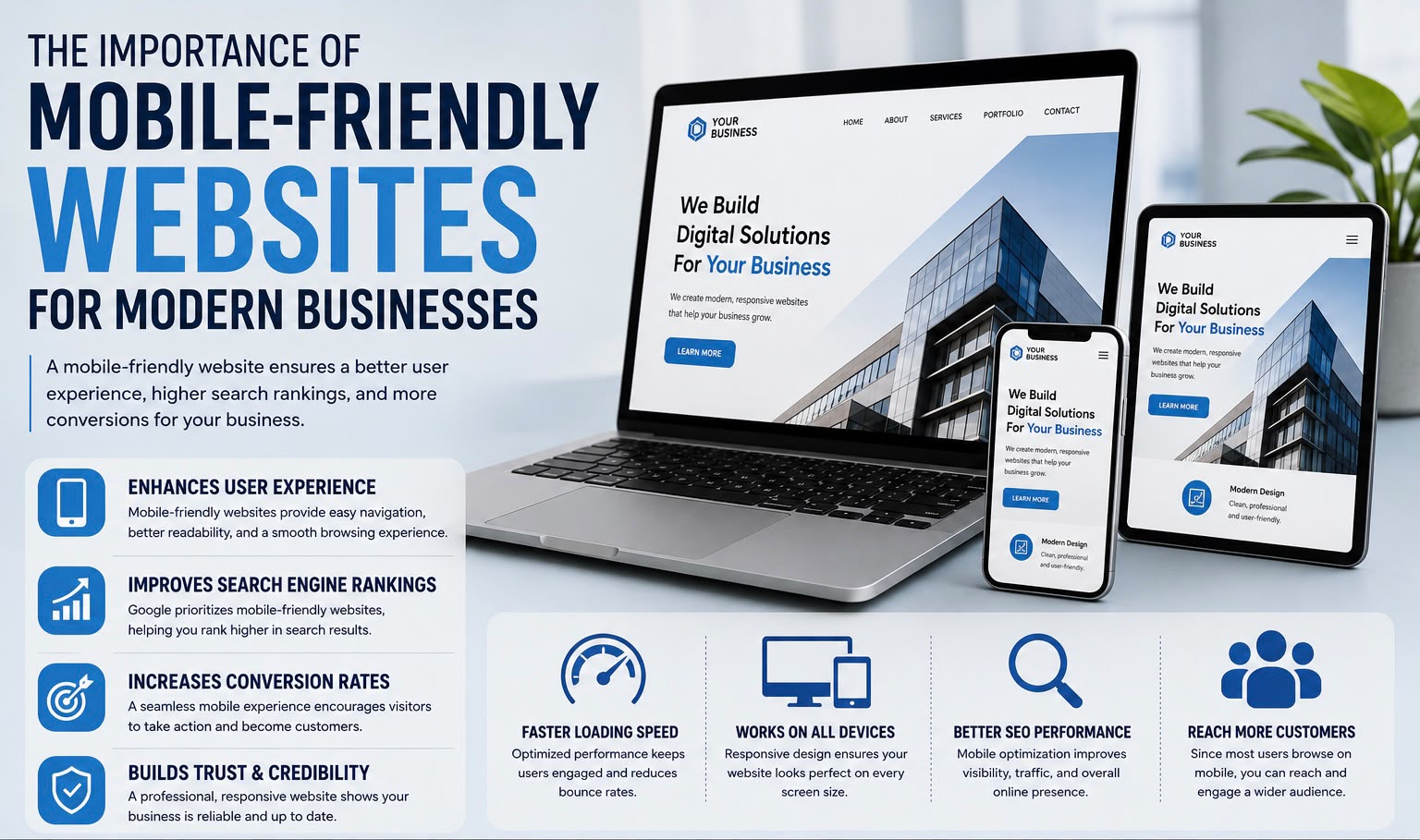
Importance of Mobile-Friendly Websites for Modern Businesses
Today, most people browse the internet using their smartphones. Whether they are searching for products, booking services, or reading information, users expect websites to load quickly and work perfectly on every screen size. A mobile-friendly website is no longer optional—it’s a necessity for businesses that want to attract and retain customers. What Is a Mobile-Friendly Website? A mobile-friendly website automatically adjusts its layout, images, and content to fit different screen sizes, including smartphones and tablets. Users can easily navigate the website without zooming, scrolling sideways, or struggling to click buttons. Enhances User Experience Visitors are more likely to stay on a website that is easy to navigate on mobile devices. Responsive layouts, readable text, and touch-friendly buttons create a smooth browsing experience that keeps users engaged. Improves Search Engine Rankings Search engines prioritize mobile-friendly websites because they provide a better experience for users. A responsive website can improve your visibility in search results and help attract more organic traffic. Increases Conversion Rates When customers can easily browse products, complete forms, or make purchases on their phones, they are more likely to take action. A mobile-optimized website removes barriers that often lead to abandoned visits. Builds Trust and Credibility A modern, responsive website shows customers that your business is professional and up to date. Visitors are more confident doing business with companies that provide a seamless digital experience. Supports Faster Loading Speeds Mobile-friendly websites are typically optimized for performance. Faster loading pages reduce bounce rates and improve customer satisfaction, especially for users on mobile networks. Why Choose Professional Responsive Web Development? Professional developers ensure: This ensures your website performs reliably across desktops, tablets, and smartphones. Conclusion A mobile-friendly website helps businesses reach more customers, improve search rankings, and deliver a better user experience. As mobile usage continues to grow, investing in responsive web development is essential for long-term online success. At Debuggers, we build responsive, high-performance websites that look great and function flawlessly on every device, helping businesses grow in today’s digital world.
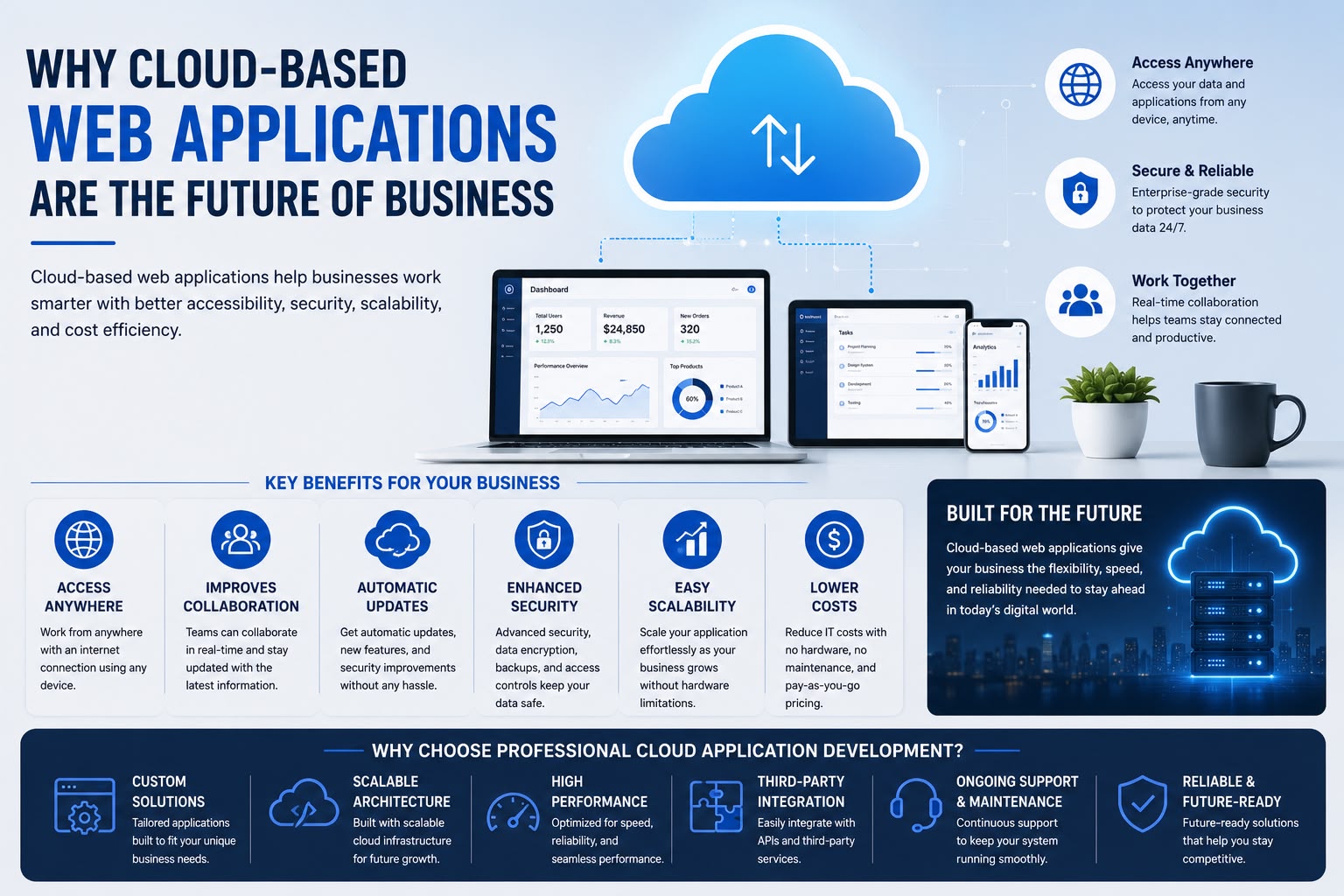
Why Cloud-Based Web Applications Are the Future of Business
Businesses today need flexibility, speed, and secure access to their data from anywhere. Traditional software often requires expensive hardware, manual updates, and limited accessibility. Cloud-based web applications solve these challenges by allowing businesses to access their systems through a web browser, anytime and from any device. As companies continue their digital transformation, cloud applications have become an essential part of modern business operations. What Is a Cloud-Based Web Application? A cloud-based web application is software that runs on cloud servers instead of being installed on a local computer. Users simply access the application through the internet using a browser. These applications automatically store data online, making collaboration and remote work much easier. Access Your Business Anywhere One of the biggest advantages of cloud applications is accessibility. Employees can securely log in from the office, home, or while traveling using laptops, tablets, or smartphones without installing additional software. Improves Team Collaboration Cloud-based systems allow multiple users to work on the same data simultaneously. Real-time collaboration improves communication, reduces delays, and keeps everyone working with the latest information. Automatic Updates and Maintenance Unlike traditional software, cloud applications receive automatic updates from the server. Businesses always benefit from the latest features, security improvements, and performance enhancements without manual installations. Enhanced Security Professional cloud platforms use advanced security measures such as: These features help protect valuable business information from cyber threats and data loss. Easy Scalability As your business grows, cloud applications can easily handle increased users, data, and workloads. You can expand your system without investing in expensive hardware or complex infrastructure. Lower Operational Costs Cloud solutions reduce costs by eliminating the need for on-site servers, hardware maintenance, and software installation. Businesses only pay for the resources they need, making cloud applications a cost-effective long-term solution. Why Choose Professional Cloud Application Development? Experienced developers ensure: Professional development ensures your cloud application remains reliable, secure, and ready for future growth. Conclusion Cloud-based web applications provide businesses with greater flexibility, security, and scalability than traditional software. They enable teams to work from anywhere, improve collaboration, reduce costs, and support long-term business growth. At Debuggers, we develop secure, scalable, and high-performance cloud-based web applications tailored to your business needs, helping you stay competitive in today’s digital world.