Section 1: Introduction to AI Code Assistants and Security Risks

The Rapid Adoption of Coding Copilots via AI Code Assistants
In modern software engineering, development teams increasingly rely on intelligent AI Code Assistants to accelerate web application delivery. Furthermore, these generative models draft complex boilerplate scripts and full-stack modules within seconds. Consequently, productivity metrics across digital agencies have reached unprecedented heights.
The Overlooked Security Trade-Off
However, speed often comes at the direct expense of cybersecurity hygiene and rigorous code validation. Many developers accept suggestions from these systems without performing deep security reviews. Therefore, hidden vulnerabilities frequently slip unnoticed into production enterprise environments.
Unpacking the Root Causes of Flaws
Generative models train on vast public repositories that often contain outdated or insecure patterns. Consequently, when prompted, these systems can replicate historical security flaws natively. Ultimately, organizations must implement robust oversight to neutralize these latent threats before deployment.
Section 2: Common Security Vulnerabilities Handled by AI Code Assistants

Injection Flaws and Improper Validation
Advanced automation platforms frequently generate database queries or data processing scripts lacking proper sanitization. Specifically, unsanitized user inputs open systems wide up to SQL injection and cross-site scripting (XSS) exploits. Therefore, backend logic demands strict manual review to ensure data security.
Insecure Deserialization and Cryptographic Weaknesses
Beyond simple input handling, these utilities occasionally select deprecated cryptographic hashing functions or weak token generation methods. Furthermore, legacy libraries recommended by these models may carry unpatched CVE records. Consequently, enterprise applications become vulnerable to data interception and privilege escalation attacks.
Hardcoded Secrets and API Key Leakage
Another pervasive risk involves generative tools inadvertently producing code containing hardcoded credentials or mock API keys. If developers fail to remove these testing tokens, malicious actors can exploit them easily. Thus, automated repository scanners are vital for catching secrets prior to public release.
Section 3: The Illusion of Competence and Developer Over-Reliance

The Dangers of Blind Acceptance
As conversational coding tools grow more convincing, developers tend to lower their critical guard. This psychological phenomenon creates a false sense of security regarding generated code blocks. Meanwhile, complex logic flaws remain deeply embedded within the underlying script architecture.
Bridging the Gap With Human Review
Technology remains a powerful assistant rather than a substitute for expert cybersecurity oversight. Digital agencies must foster a culture where codebase output undergoes rigorous peer review and automated testing. Hence, balancing automation with human vigilance ensures long-term system resilience.
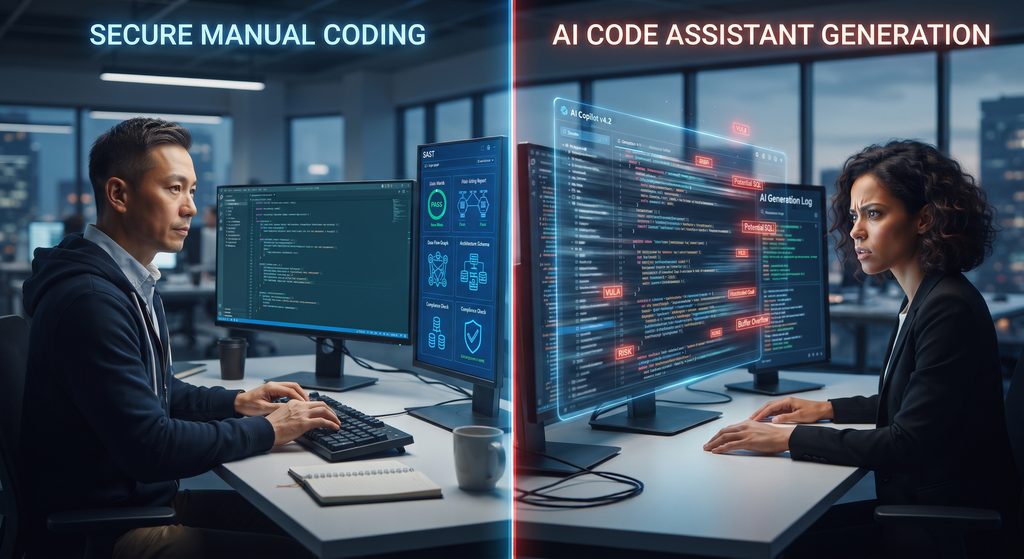
Section 4: Comparative Matrix: Secure Coding Versus AI Code Assistants Generation
Evaluating Output Reliability
Unchecked generation prioritizes functional execution over defense-in-depth architecture. Conversely, secure coding practices mandate strict adherence to international security frameworks like OWASP Top 10. Therefore, enterprise engineering teams must establish strict validation guidelines.
Operational Speed Versus Risk Mitigation
Relying entirely on automated suggestions accelerates initial feature deployment timelines. However, fixing a security breach post-launch costs significantly more than writing secure code initially. Accordingly, hybrid workflows combine high-speed drafting via AI Code Assistants with stringent security gating.
Section 5: Best Practices for Securing Web Development Workflows
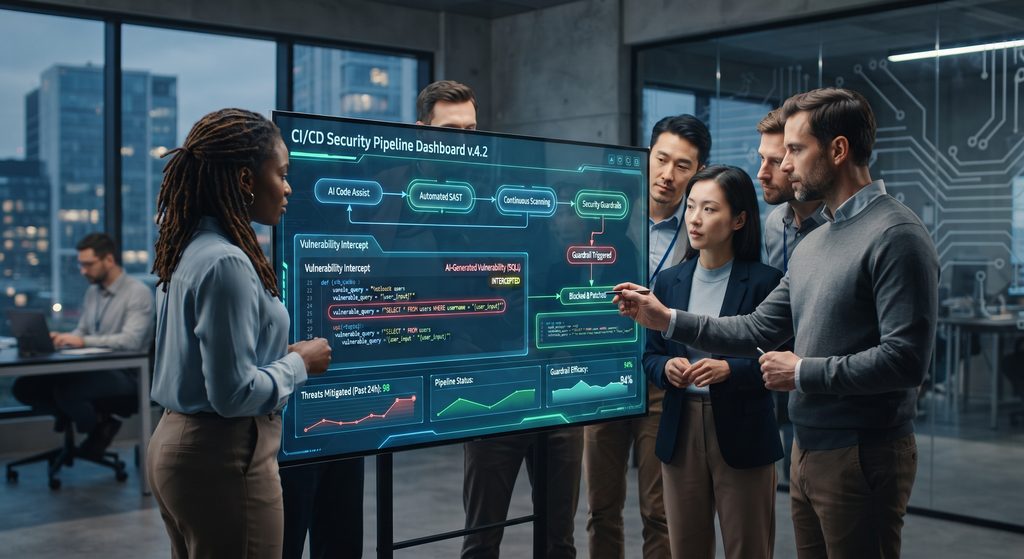
Integrating Automated Security Scanners in CI/CD
To mitigate risks effectively, organizations must embed Static Application Security Testing (SAST) tools into their deployment pipelines. Every time new code is generated, security scanners analyze the syntax for known vulnerabilities. Consequently, faulty patterns are intercepted instantly.
Establishing Clear Organizational Guardrails
Engineering leaders should enforce strict developer training regarding the limitations of generative models. By defining clear guardrails for prompt engineering and code review standards, agencies safeguard their digital assets. Ultimately, proactive security governance ensures sustainable innovation without compromising enterprise safety.
To ensure generated code remains resilient against modern threats, developers should cross-reference suggestions with the security standards outlined in the OWASP Top 10.