Section 1: Introduction to Technical Debt in Enterprise Web Development
The Hidden Cost of Legacy Code
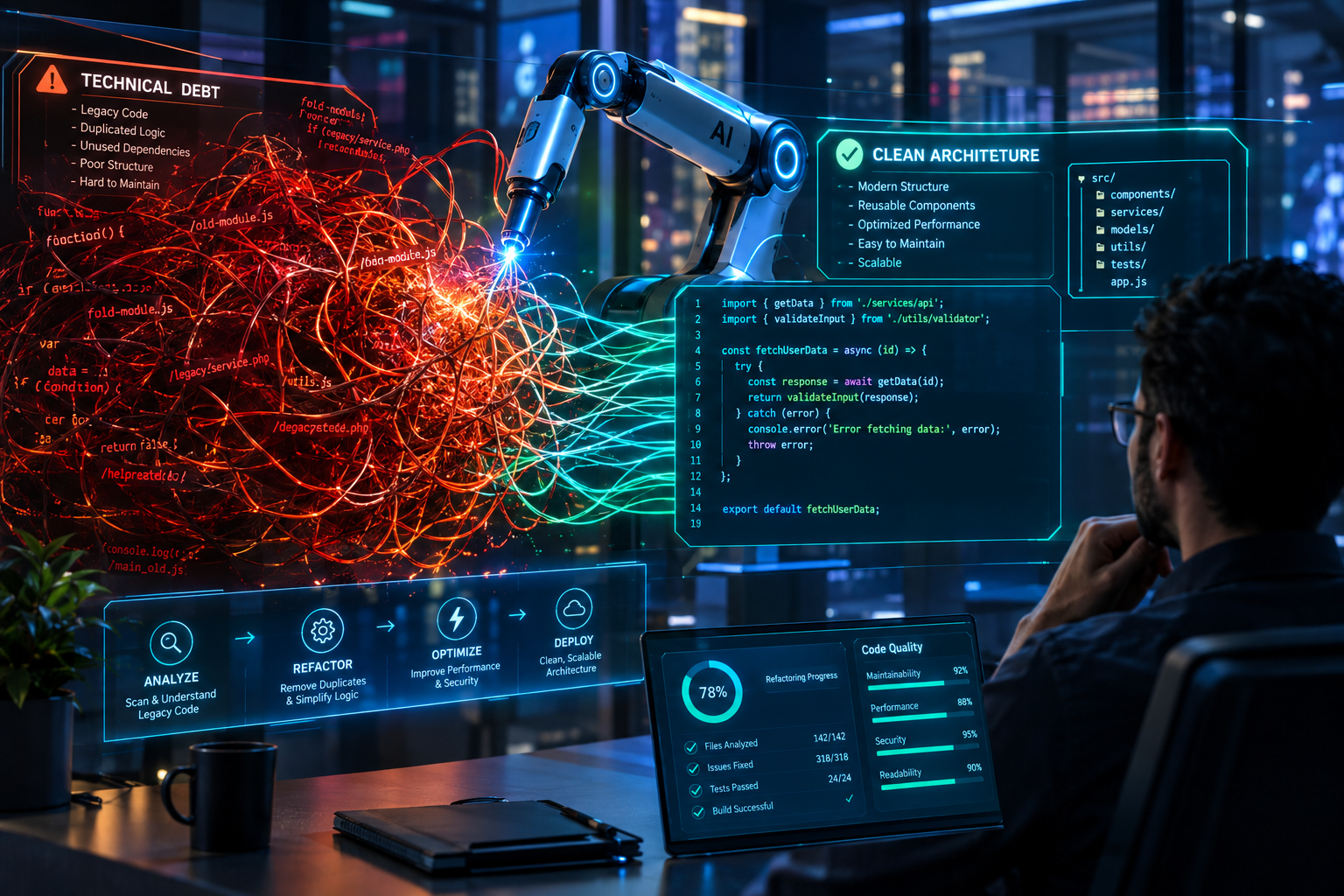
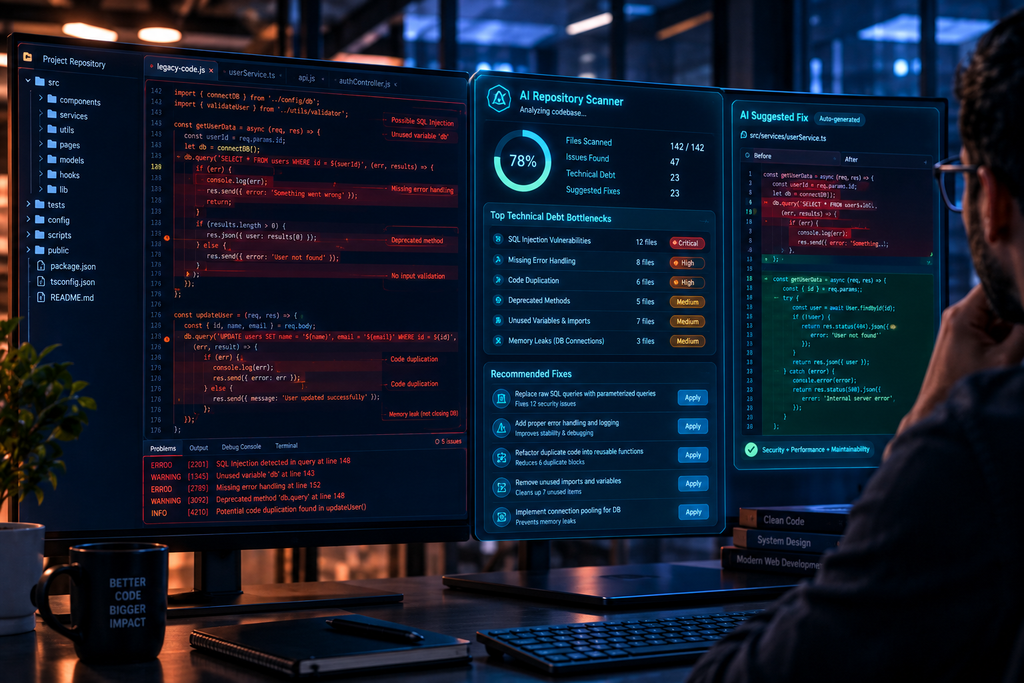
Enterprise websites frequently accumulate massive amounts of technical debt as they scale across multi-region servers and complex codebases. Furthermore, outdated scripts and poorly optimized stylesheets constantly slow down page load times. Consequently, development teams spend countless hours fixing legacy bugs instead of building new features.
The Emergence of Machine Learning Solutions
Traditional manual refactoring is notoriously slow, expensive, and prone to human oversight errors. Therefore, modern engineering departments rely heavily on advanced AI-Driven Code Refactoring systems to scan repositories instantly. Moreover, these intelligent tools identify structural bottlenecks and propose clean code rewrites automatically.
Transforming Enterprise Web Maintenance
Machine learning models analyze millions of code patterns to predict where system failures might occur next. As a result, technical directors can proactively clear technical debt before it impacts search engine rankings or user experience. Ultimately, automated refactoring ensures long-term digital stability.
Section 2: How Machine Learning Identifies and Resolves Code Bloat
Automated Code Auditing and Static Analysis
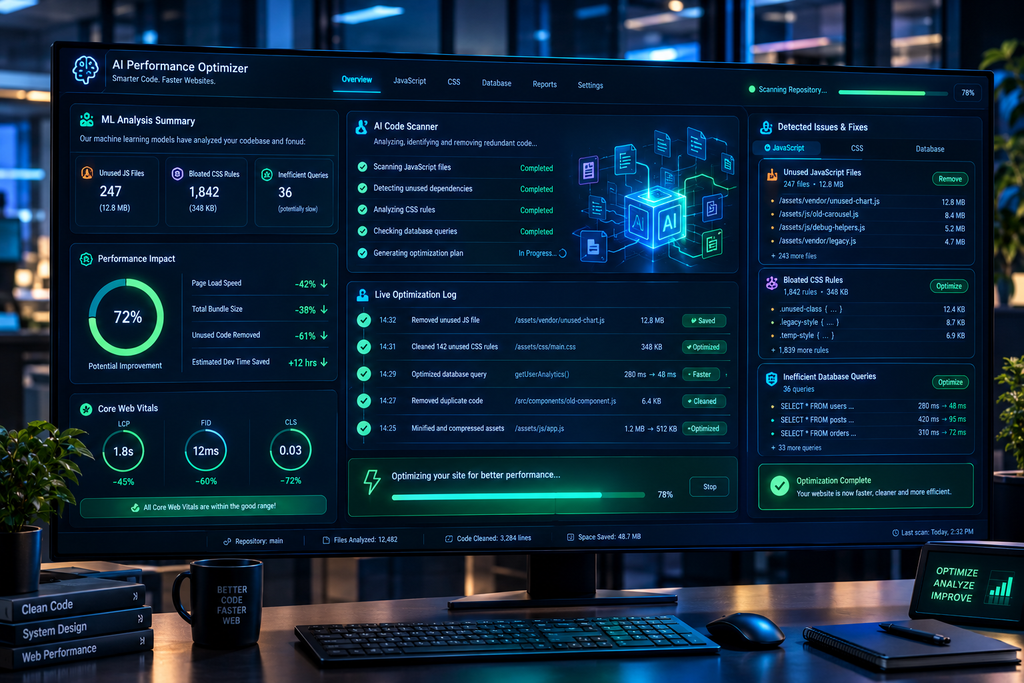
Modern search optimization and site performance depend heavily on clean, lightweight source code. Traditional static analysis tools flag basic syntax errors, but they lack genuine contextual understanding. Conversely, AI-Driven Code Refactoring platforms comprehend deep logical structures and semantic relationships across enterprise frameworks.
Eliminating Unused Scripts and Redundancies
As websites evolve, developers often leave behind orphaned JavaScript files, unused CSS rules, and bloated plugin dependencies. Machine learning models trace execution paths to isolate dead code accurately. Therefore, automated refactoring safely strips away unnecessary bytes, dramatically improving Core Web Vitals and crawl efficiency.
Optimizing Database Queries and Backend Scripts
Beyond front-end assets, enterprise backends frequently suffer from inefficient database queries that delay page rendering. Intelligent refactoring engines rewrite slow database calls into optimized syntax. Consequently, server response times drop significantly, enhancing both user retention and crawler indexing speed.
Section 3: Security Vulnerabilities and Automated Code Healing

Mitigating Zero-Day Exploits Through AI
Technical debt is not just a performance bottleneck; it is also a major security risk for enterprise web platforms. Outdated libraries and deprecated functions open doors for malicious cyberattacks. Thus, AI-Driven Code Refactoring acts as an automated security shield by patching vulnerabilities in real time.
Continuous Vulnerability Patching
Waiting for quarterly manual security audits leaves websites exposed to emerging threats. Advanced machine learning systems monitor global threat databases and automatically update vulnerable code snippets across the entire repository. Hence, development teams maintain robust security postures with minimal manual friction.
Enforcing Secure Coding Standards
Code consistency is difficult to maintain across large, distributed development teams. Automated refactoring tools enforce strict style guides and security protocols universally. Consequently, every new line of code adheres to enterprise-grade safety standards automatically.
Section 4: Comparative Matrix: Manual Refactoring Versus AI-Driven Automation
Processing Speed and Scale
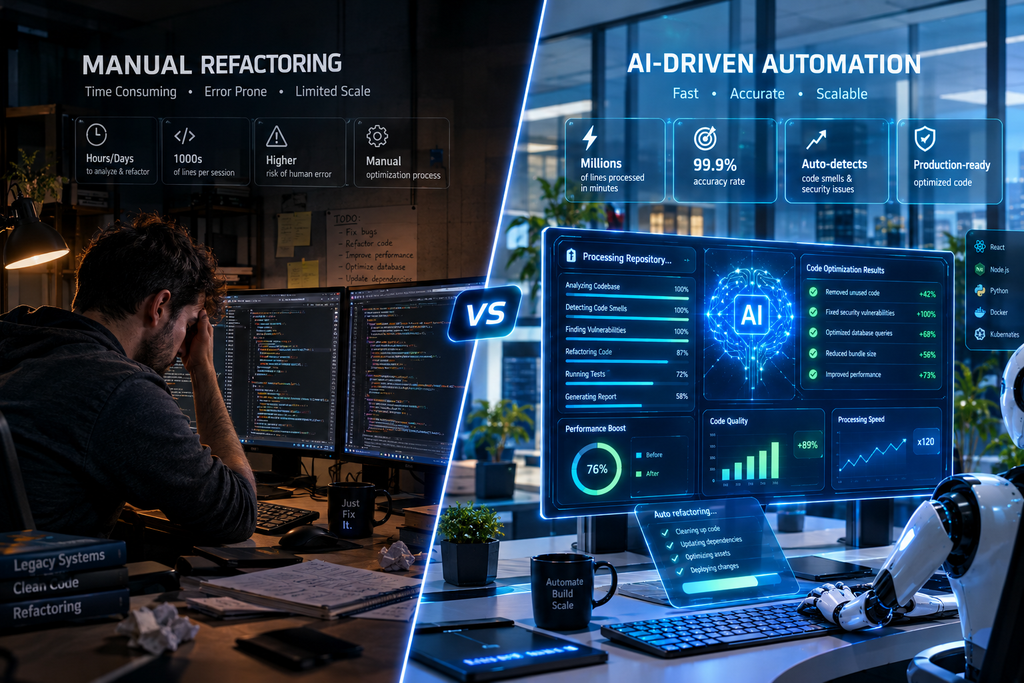
Enterprise codebases often contain millions of lines of code, making manual refactoring a multi-month endeavor. Automated platforms process entire repositories in minutes. However, human oversight remains essential for validating high-level business logic and unique brand requirements.
Cost Efficiency Versus Code Quality
Manual code cleanups demand substantial engineering hours, driving up operational budgets. Conversely, relying exclusively on automated tools without code reviews can introduce subtle logic errors. Therefore, combining AI-Driven Code Refactoring with expert developer guidance creates the ultimate operational balance.
Section 5: Building a Future-Proof Development Workflow
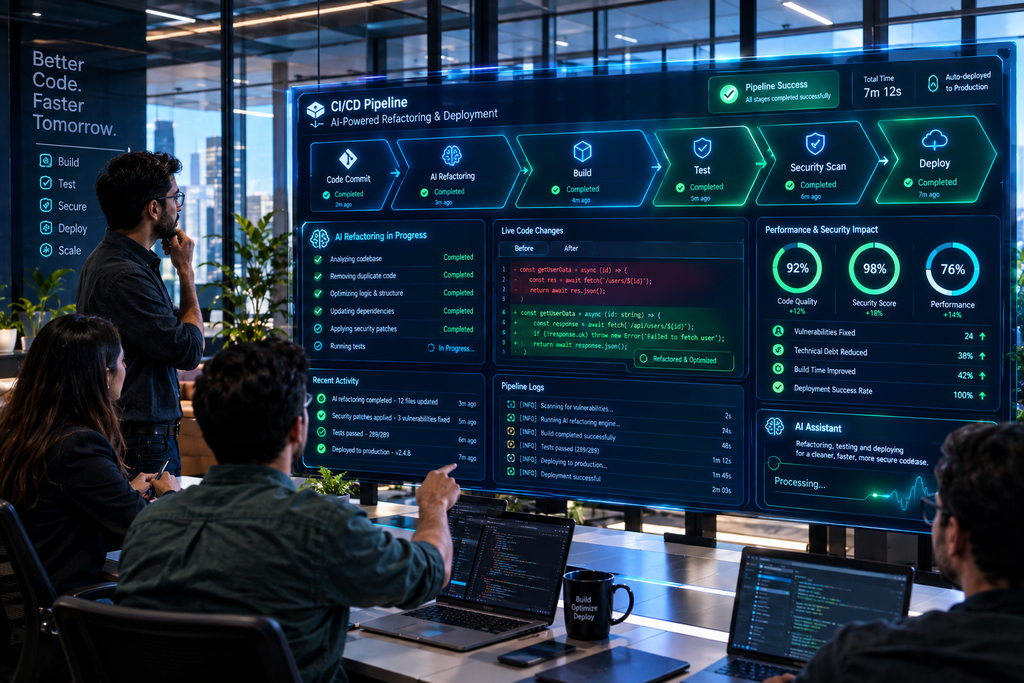
Integrating Automation into CI/CD Pipelines
To maximize efficiency, engineering teams must embed automated refactoring directly into their Continuous Integration and Continuous Deployment (CI/CD) pipelines. Every time new code is pushed, intelligent algorithms test and optimize it instantly. Consequently, technical debt is cleared continuously rather than accumulating over years.
Long-Term Digital Leadership
Adopting modern machine learning tools empowers digital agencies to deliver lightning-fast, secure, and scalable web experiences. By leveraging AI-Driven Code Refactoring workflows alongside human expertise, organizations secure long-term market dominance and flawless technical performance.
While traditional static program analysis flags basic syntax errors, AI-driven tools comprehend deep logical structures to resolve complex architectural flaws.