Section 1: AI graphic design Introduction to Next-Generation Creative Technologies
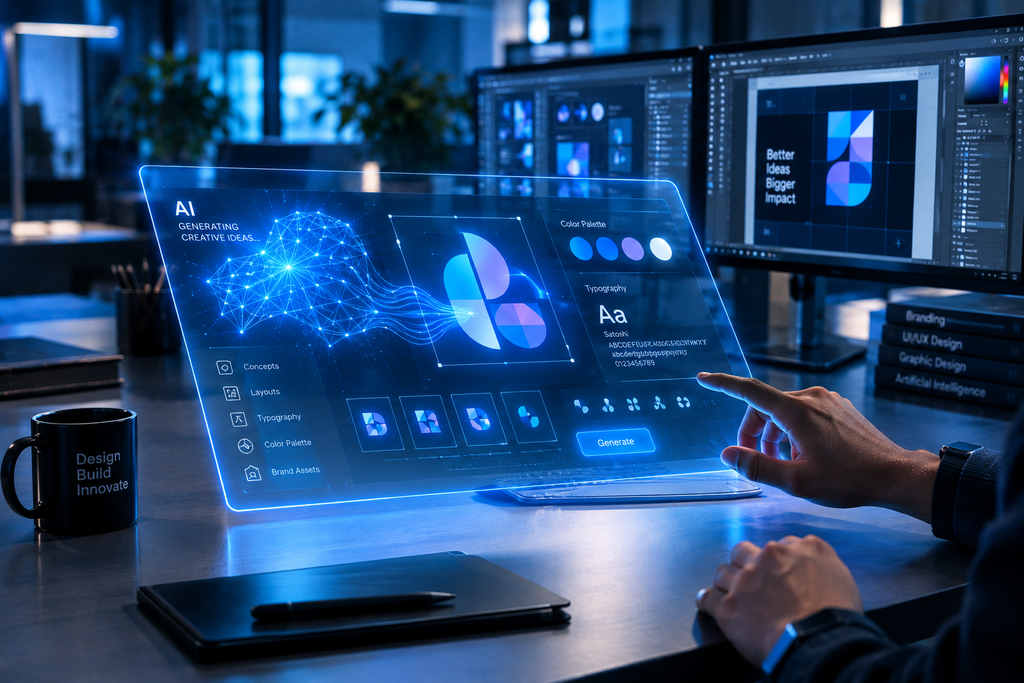
AI Graphic Design Tools The Evolution of Digital Visual Creation
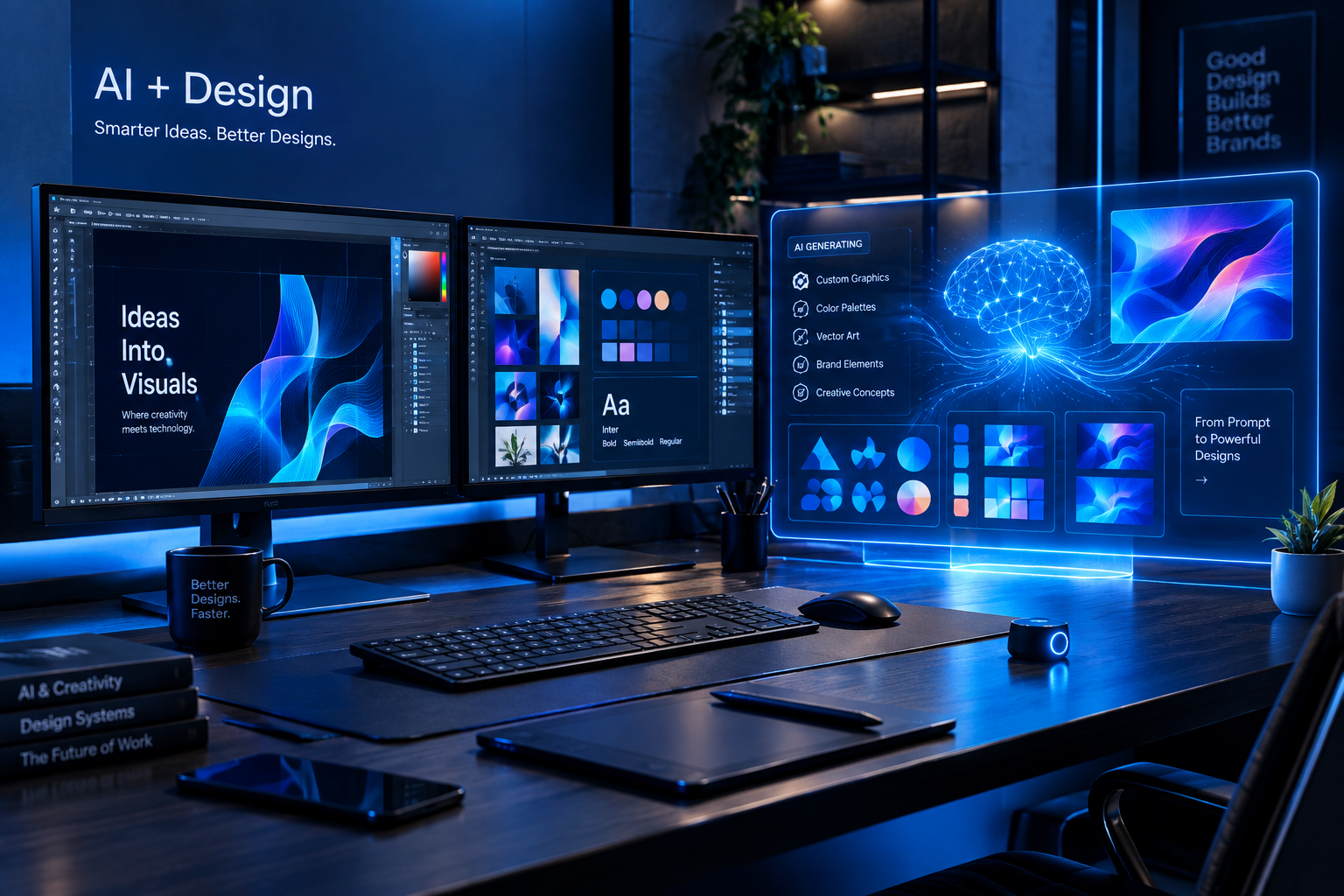
AI graphic design In 2026, creative agencies face huge demands for rapid visual assets. Furthermore, traditional manual workflows are quickly being replaced by machine intelligence. Therefore, integrating AI graphic design tools into daily pipelines is a critical business imperative.
Algorithmic Synthesis and Prompt Engineering
Generative models have fundamentally altered how professionals execute visual assets. Consequently, agencies now focus on advanced algorithmic synthesis and prompt engineering. Moreover, utilizing high-performance AI graphic design tools eliminates repetitive production bottlenecks entirely.
Eliminating Production Bottlenecks Quickly
Historically, producing multi-channel UI mockups consumed days of intensive labor. Today, however, creative teams synthesize custom iconography within seconds. Thus, automated asset generation drastically reduces time-to-market across various digital marketing campaigns.
Scaling Personalization and Layout Generation
Client expectations for hyper-personalized digital experiences continue to scale upward. Meanwhile, manual design methodologies struggle to keep pace with demand. Hence, specialized AI graphic design tools provide an immediate competitive advantage.
Section 2: AI graphic design Comprehensive Feature Analysis of Leading Design Platforms
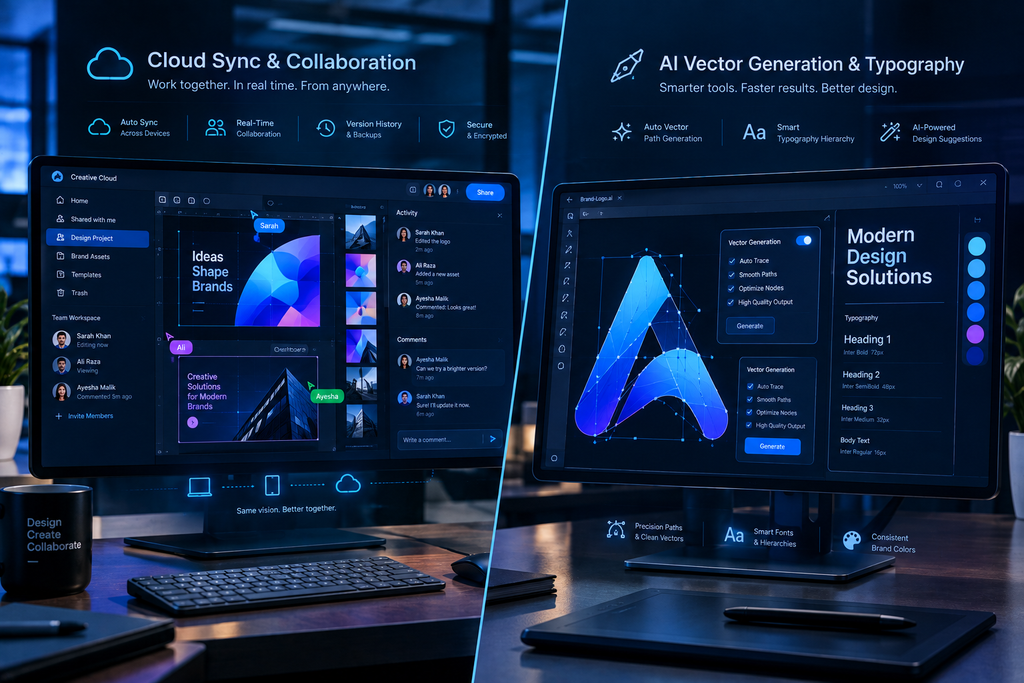
Platform Capabilities and Tech Stack Integration
Navigating modern creative software requires a deep understanding of neural rendering engines. As software vendors release sophisticated iterations, technical directors evaluate specific platform capabilities. Consequently, top-tier graphic design tools seamlessly integrate with existing enterprise tech stacks.
Neural Vector Generation and Typography Layouts
Modern design platforms incorporate advanced vector manipulation engines driven by neural networks. When designers utilize leading graphic design tools, they easily convert prompts into scalable vectors. Furthermore, this technical leap ensures absolute crispness across physical print mediums.
Real-Time Cloud Synchronization and Remote Teams
Enterprise design operations demand robust collaboration frameworks for remote team members. Premium graphic design tools incorporate real-time cloud synchronization and automated tracking. Therefore, multi-disciplinary teams streamline communication between developers and stakeholders effortlessly.
Automated Brand Governance and Consistency
Maintaining rigorous brand consistency is a persistent challenge for growing enterprises. Cutting-edge graphic design tools feature intelligent brand governance modules. Thus, automated oversight eliminates human error and protects brand equity.
Section 3: Comparative Matrix: Differences Between Leading Platforms
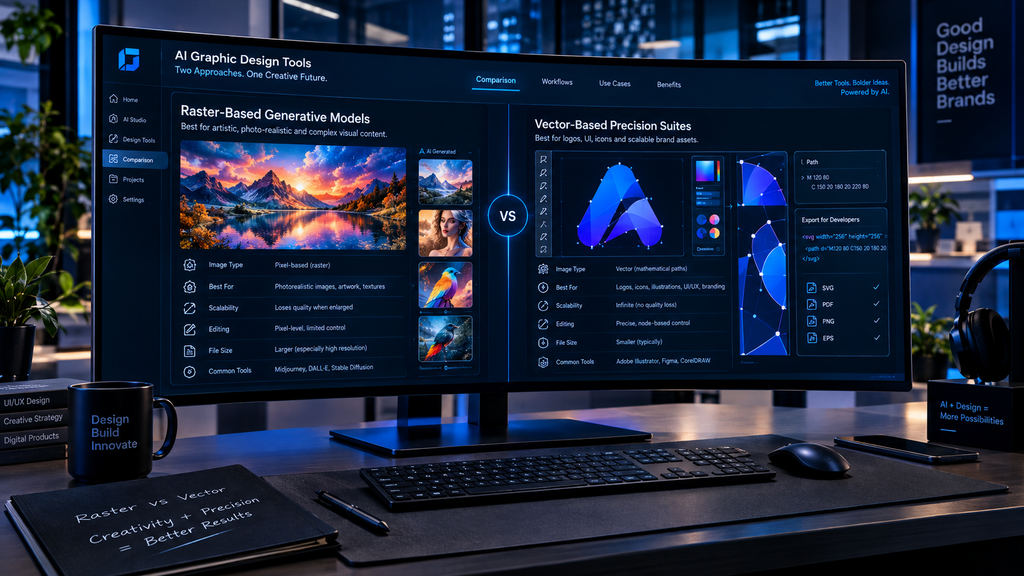
Art Generators Versus Professional UI Suites
Creative directors must analyze distinct structural differences between various software platforms. While consumer-facing platforms excel at artistic rendering, enterprise-grade graphic design tools prioritize precision. Additionally, developers benefit from seamless code handoff features.
Raster Images Versus Vector Path Precision
Understanding the architectural dichotomy between neural models is essential for workflows. Raster-focused graphic design tools generate breathtaking photographic imagery easily. Conversely, vector-oriented platforms ensure that every generated element is mathematically structured.
Cloud Workflows Versus Local Hardware Acceleration
Contemporary software offerings distribute workloads between cloud neural rendering and local acceleration. Cloud-based graphic design tools offload heavy computational tasks to remote clusters. However, security-conscious enterprises often evaluate locally hosted AI graphic design tools for strict compliance.
Production-Ready Exports and Developer Handoff
Creative software must export assets directly into production-ready web frameworks. Advanced graphic design tools offer robust API integrations and direct export plugins. Prioritizing these AI graphic design tools significantly accelerates project delivery timelines.
Section 4: Strategic Selection Guide: Which Tool to Choose in 2026
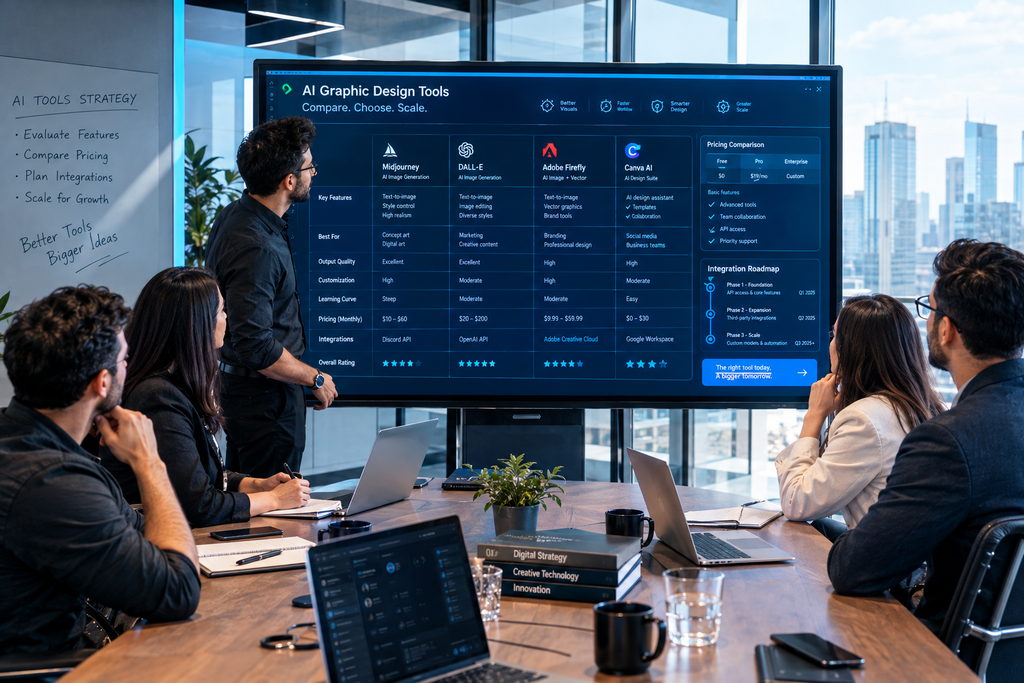
Assessing Budgets and Organizational Scale
Selecting optimal design software requires a methodical evaluation of organizational budget constraints. Decision-makers must align software features with specific operational goals. Whether operating an agile agency or an enterprise department, choosing correct graphic design tools impacts overall efficiency.
Freelancers Versus Enterprise License Requirements
Small business owners often benefit from versatile subscription-based software options. In contrast, enterprise environments demand robust licenses featuring advanced security encryption. Balancing initial investment costs ensures an optimal return on expenditure.
Mitigating Onboarding Learning Curves
Machine learning software introduces transitional learning curves for staff accustomed to legacy applications. Implementing user-friendly AI graphic design tools equipped with interactive tutorials minimizes disruption. Agencies must invest in comprehensive training sessions accordingly.
Future-Proofing Through Intelligent Adaptation
Artificial intelligence continues to redefine the boundaries of digital creativity today. By strategically adopting state-of-the-art platforms, forward-thinking agencies position themselves as pioneers. Through continuous technological evolution, businesses navigate modern digital complexities successfully.
To better understand the underlying technology behind these creative platforms, readers can explore the history and development of generative artificial intelligence.