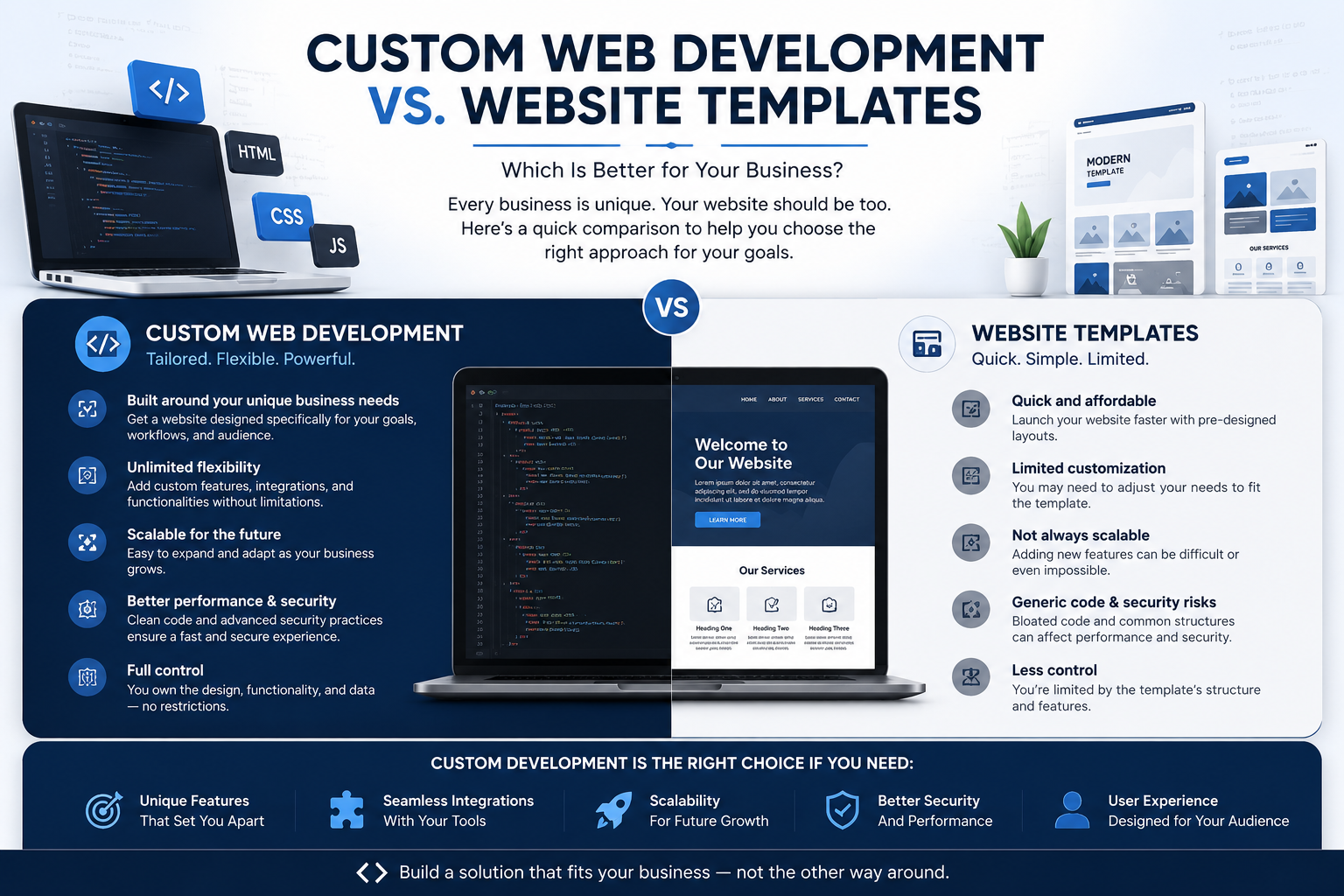
Choosing the right way to build a website can have a major impact on your business. Some businesses choose ready-made templates because they can be launched quickly, while others need a website built specifically around their goals, features, and workflows.
For businesses with unique requirements, custom web development can provide greater flexibility and control than a standard website template.
What Is Custom Web Development?
Custom web development involves creating a website specifically for a business instead of relying entirely on a pre-designed template.
The design, functionality, structure, and integrations can be developed around the company’s specific requirements.
Custom development can include:
- Unique Website Designs
- Custom Features
- Business-Specific Workflows
- API Integrations
- Custom Forms
- Advanced Functionality
- Web Applications
- Scalable Website Architecture
This approach allows a website to be built around the business rather than forcing the business to adapt to a template.
Why Do Businesses Use Website Templates?
Website templates can be useful for businesses that need a simple website with standard functionality.
Templates can provide pre-built layouts, sections, and design elements that make it possible to launch a website more quickly.
However, businesses may eventually need features or functionality that a standard template was not designed to support.
More Flexibility With Custom Development
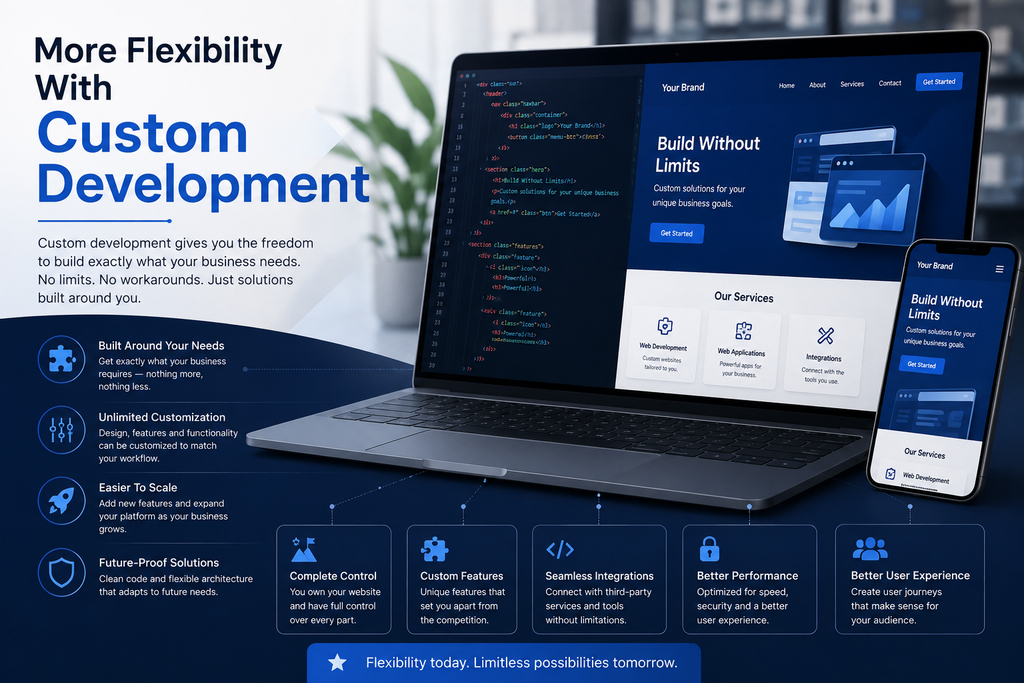
One of the biggest advantages of custom development is flexibility.
A custom website can be designed around the exact requirements of a business. Instead of changing the business process to fit a template, the website can be developed to support the existing workflow.
This is particularly useful when a business requires unique features or integrations.
Better Control Over Website Functionality
Templates usually come with predefined structures and features.
Custom development provides greater control over how different parts of a website work.
Businesses can develop functionality for specific requirements such as customer portals, dashboards, booking systems, calculators, forms, API connections, or other custom solutions.
Supports Business Growth
A website should be able to grow with the business.
As a company expands, it may need additional pages, features, integrations, or custom functionality. A properly planned custom website can provide a foundation that supports these future requirements.
This can reduce the need for major changes when new business requirements appear.
Custom Integrations
Modern businesses often use multiple digital tools and platforms.
Custom web development can connect a website with external systems through APIs and other integrations.
These connections can help businesses manage information more efficiently and automate certain processes.
Better User Experience
A custom website can be designed around the way customers interact with a business.
Instead of using generic layouts, developers can create user journeys that make sense for the specific products, services, and goals of the business.
A well-planned user experience can make it easier for visitors to find information and complete important actions.
Custom Development for Web Applications
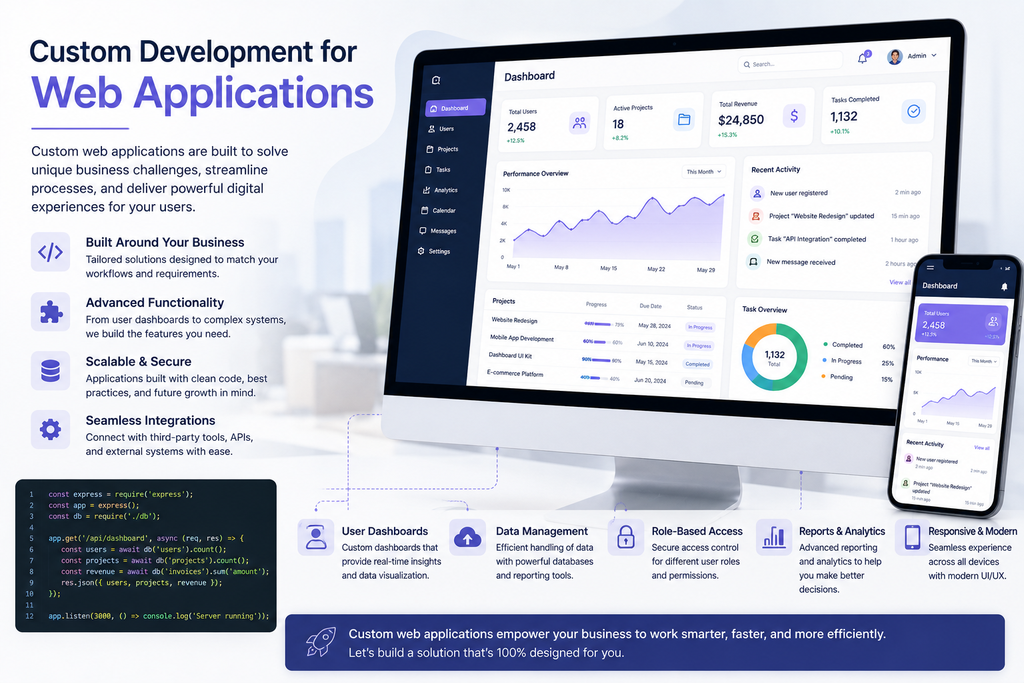
Some businesses require more than a traditional website.
Web applications can provide interactive functionality through features such as user accounts, dashboards, data management, custom tools, and business systems.
Professional web application development can create these experiences around specific business requirements.
When Should You Choose Custom Web Development?
Custom development can be a good choice when your business:
- Needs unique functionality
- Requires custom integrations
- Has complex workflows
- Needs a web application
- Wants complete design flexibility
- Plans to scale its digital platform
- Requires functionality that standard templates cannot provide
Why Choose Professional Custom Web Development?
Professional custom development provides businesses with:
Tailored Solutions — Features designed around specific business requirements.
Greater Flexibility — More control over design, functionality, and integrations.
Scalability — A foundation that can support future growth.
Custom User Experiences — Interfaces designed around real customer needs.
Advanced Functionality — Complex features that may not be available through standard templates.
Professional Development — Clean, structured development focused on long-term usability.
Conclusion
Website templates can be useful for simple projects, but businesses with unique requirements may benefit from a more customized approach.
Custom web development allows businesses to build digital solutions around their specific goals, workflows, customers, and future plans.
Whether you need a completely custom website or a powerful web application, choosing the right development approach can help create a digital platform that is flexible, scalable, and built for your business.