In today’s fast-moving digital world, a website is no longer just an online presence — it is a brand’s first impression. Businesses need websites that are fast, visually engaging, easy to manage, and capable of delivering unique user experiences. While traditional CMS platforms have powered websites for years, modern brands are increasingly moving toward Webflow because of its flexibility, speed, and advanced design capabilities.
This blog explores the key differences between Webflow and Traditional CMS, and why Webflow is becoming the preferred choice for businesses looking to build high-performing websites.
What is a Traditional CMS?
Traditional CMS
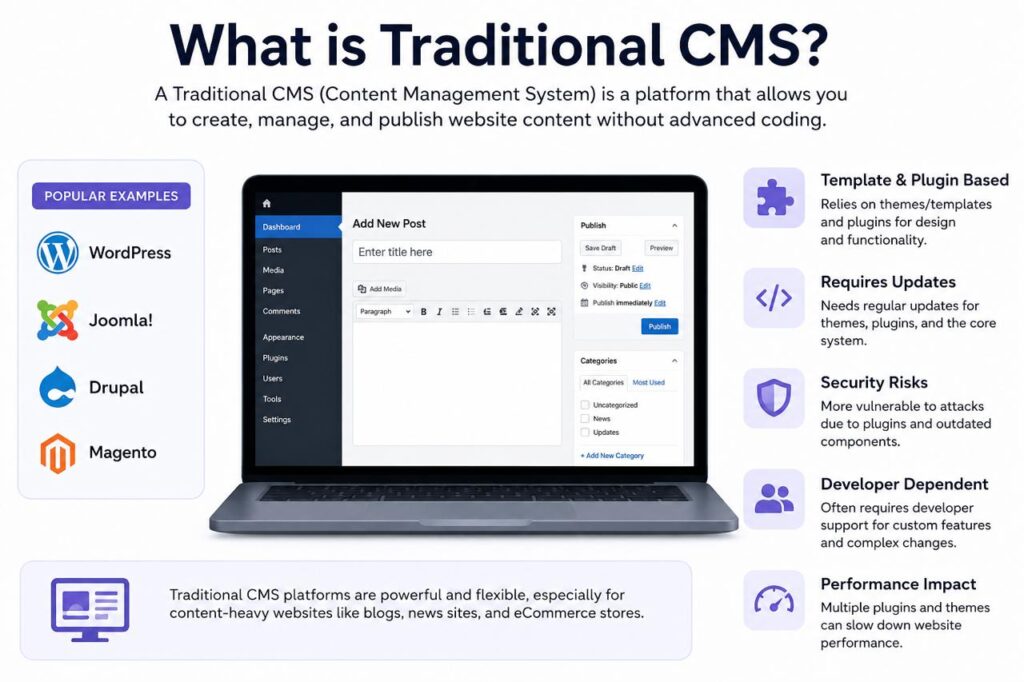
A traditional Content Management System (CMS) is a platform that allows users to create and manage website content without extensive coding knowledge. Popular CMS solutions have helped millions of businesses launch websites quickly.
Traditional CMS platforms usually depend on:
- Themes and templates
- Plugins and extensions
- Third-party tools
- Custom coding for advanced features
While they are powerful, managing performance, security, and custom designs often requires additional development work.
What is Webflow?
What Is Webflow?
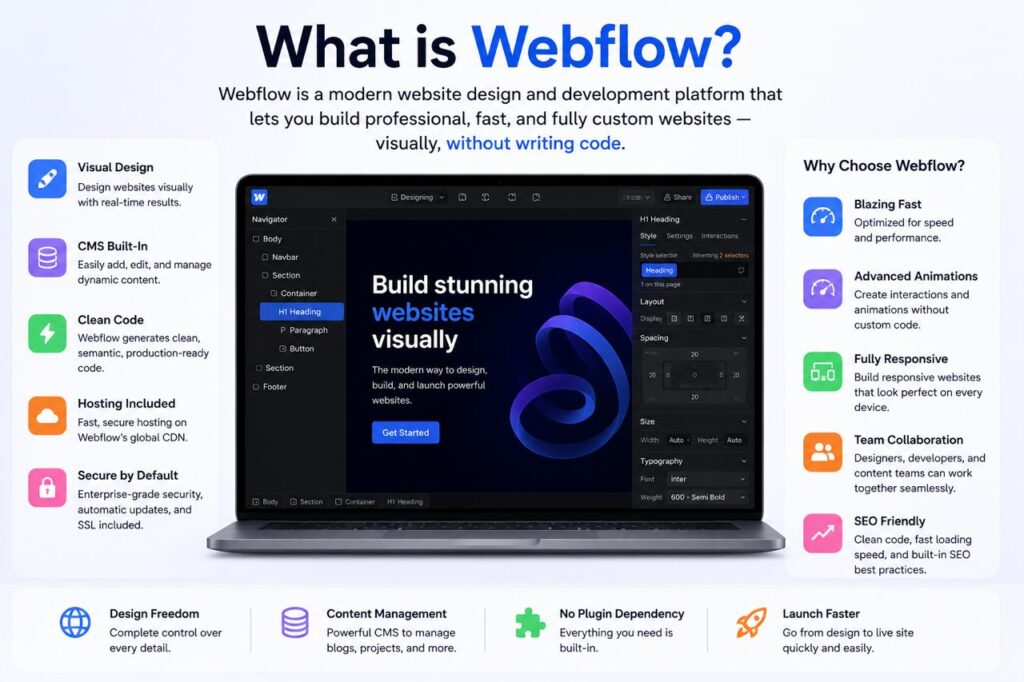
Webflow is a modern website design and development platform that combines visual design tools with professional-level website development features.
It allows designers and businesses to:
- Build custom websites visually
- Create responsive layouts
- Add advanced animations
- Manage content easily
- Publish optimized websites without heavy plugins
Webflow gives brands more control over how their website looks and performs.
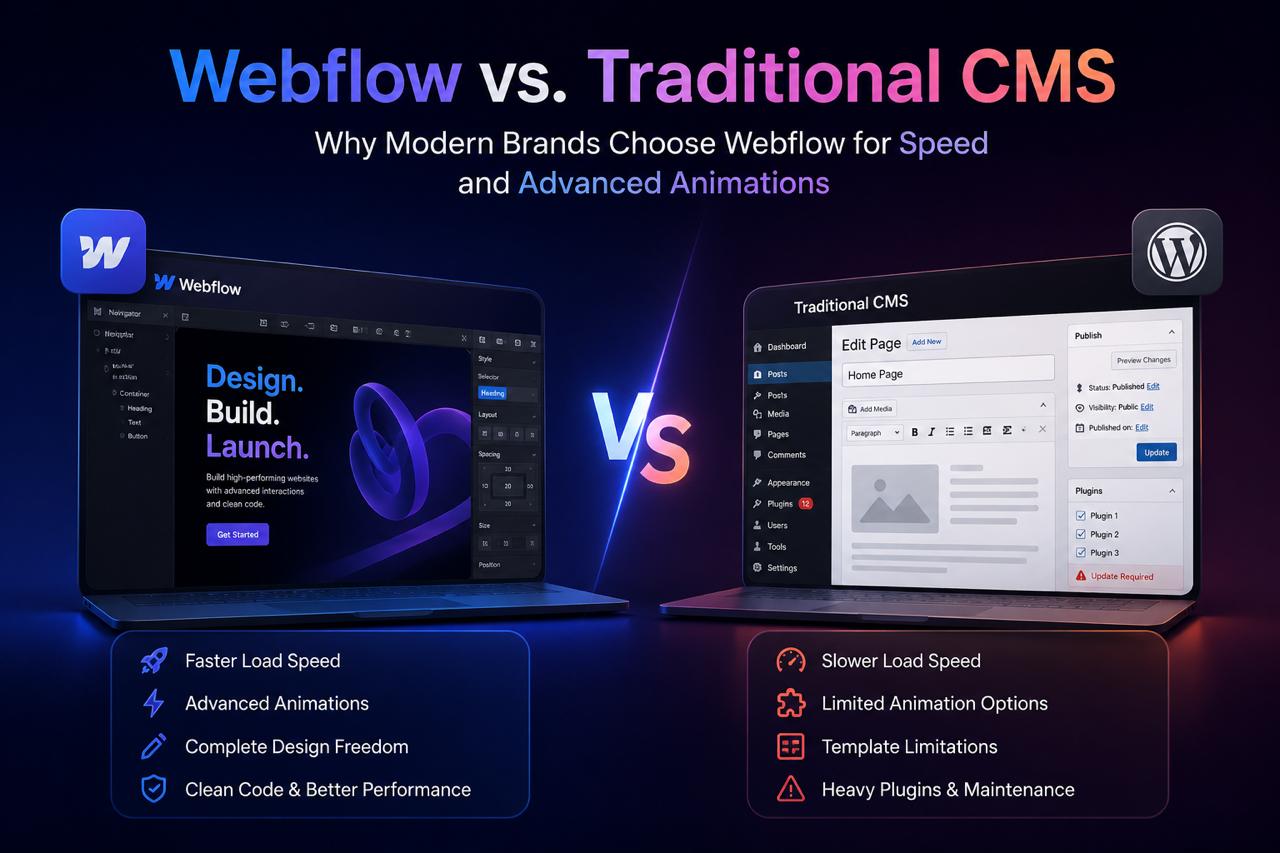
Webflow vs Traditional CMS: Key Differences
Faster Website Performance
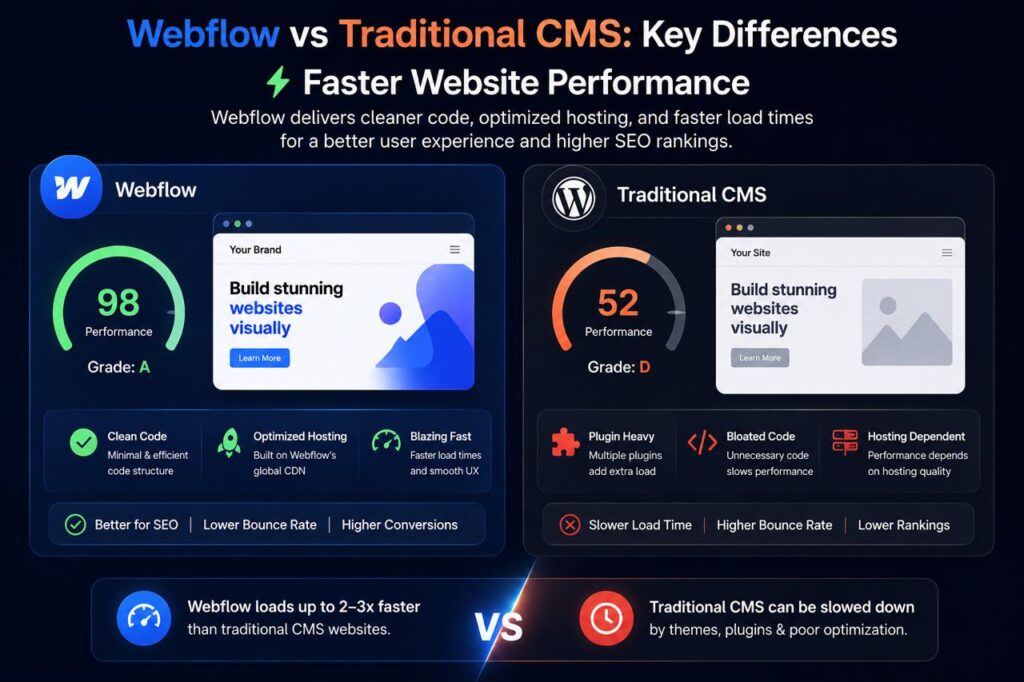
Key Differences
Website speed directly affects user experience and search engine rankings.
Traditional CMS websites often rely on:
- Multiple plugins
- Heavy themes
- Extra scripts
These elements can slow down loading times.
Webflow websites are built with cleaner code and optimized hosting infrastructure, helping brands achieve faster page speeds and smoother experiences.
A faster website means:
- Lower bounce rates
- Better user engagement
- Improved SEO performance
Advanced Custom Animations Without Heavy Coding
Modern brands want websites that feel interactive and memorable.
With traditional CMS platforms, creating complex animations often requires:
- Custom JavaScript
- Additional plugins
- Developer assistance
Webflow provides built-in animation tools that allow designers to create:
- Scroll-based animations
- Hover interactions
- Smooth transitions
- Dynamic visual effects
This helps brands create premium digital experiences without adding unnecessary complexity.
More Design Freedom
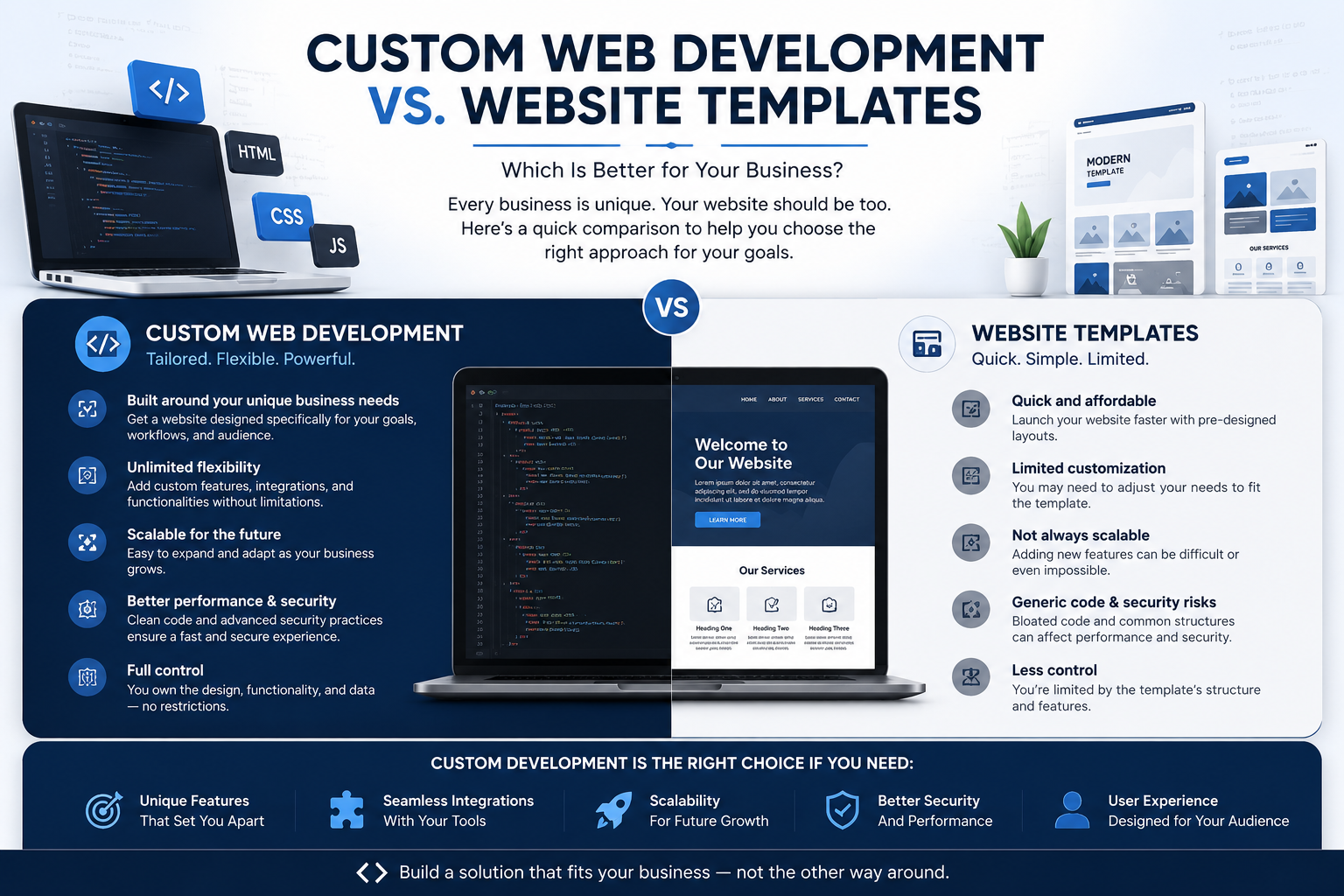
Many traditional CMS websites start with templates. While templates can be useful, they can limit creativity.
Webflow allows complete design control:
- Custom layouts
- Unique branding elements
- Pixel-level adjustments
- Responsive designs for every screen size
This gives businesses the ability to stand out instead of looking like another template-based website.
Less Dependency on Plugins
Plugins add functionality, but they can also create problems.
Too many plugins can lead to:
- Security risks
- Compatibility issues
- Slow performance
- Frequent maintenance
Webflow reduces plugin dependency by providing many features directly inside the platform.
Easier Collaboration Between Teams
Webflow makes it easier for:
- Designers
- Developers
- Marketing teams
- Content managers
Teams can work together without constantly switching between different tools.
Content updates, design changes, and publishing become much smoother.
Better Security and Maintenance
Traditional CMS platforms often require regular:
- Plugin updates
- Theme updates
- Security checks
Webflow manages hosting, security, and infrastructure, allowing businesses to focus more on their brand rather than website maintenance.
Why Are Modern Brands Choosing Webflow?
Today’s customers expect websites that are:
- Fast
- Interactive
- Mobile-friendly
- Visually impressive
Webflow helps brands achieve all of these by combining design freedom with powerful performance.
Companies are shifting toward Webflow because it provides:
 Faster loading speeds Custom animations and interactions Better design flexibility Reduced maintenance Professional-quality websites without unnecessary complexity
Final Thoughts
Traditional CMS platforms still have their place, especially for certain content-heavy websites. However, modern brands looking for speed, creativity, and unique digital experiences are increasingly choosing Webflow.
With its combination of powerful design tools, optimized performance, and advanced animation capabilities, Webflow represents the future of modern website development.
A great website is not only about having content — it’s about creating an experience. Webflow helps brands build that experience faster and smarter.